
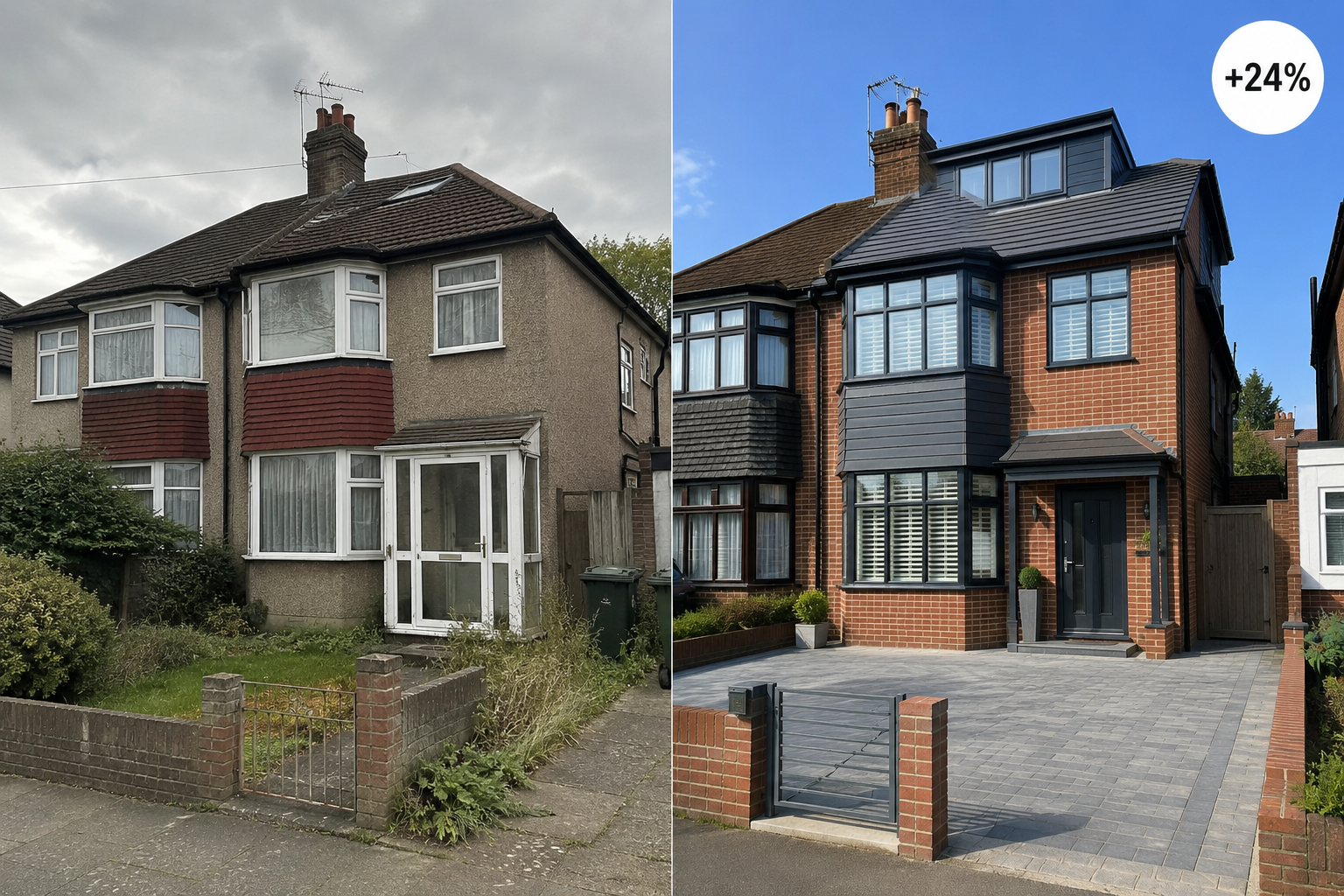
Every homeowner planning a project asks the same question: will I get my money back? It's the right question, and the honest answer surprises people. The improvement that adds the biggest percentage to your home isn't usually the one that gives you the best return on what you spend.
According to Nationwide's 2025 research on what adds value, work that adds floor space - a loft conversion or extension - can lift a home's value by up to 25%. Impressive. But spend a fraction of that knocking two rooms into one, and the return per pound can be far higher.
So which is right for you? It depends on whether you're chasing the biggest valuation or the biggest return. This guide ranks the main projects both ways, with London-specific figures and honest caveats - including the improvements that can quietly lose you money.
Space-adding projects add the most value to a London home - a loft conversion or extension with an extra bedroom and bathroom can lift value by up to 24% (Nationwide, 2025). But the best return per £1 spent is open-plan living: knocking through can cost around £3,500 and add about £48,000 to a London property (HomeOwners Alliance). Energy efficiency now matters too - moving from EPC F to C adds around 15% (Rightmove).
What Adds the Most Value to a London Home?
Projects that add floor space add the most value. A loft conversion or extension that creates an extra bedroom and bathroom can raise a three-bedroom London home's value by up to 24%, with floor-adding work adding up to 25% overall, according to Nationwide's 2025 research. An extra bedroom adds around 15%, and an extra bathroom about 6%.
The pattern is clear: bedrooms and usable square metres are what London buyers pay for. But there's a catch that trips up a lot of homeowners. The project with the biggest headline percentage often costs the most, so it isn't automatically the smartest place to put your budget. To judge that, you have to look at return per pound spent - which is where the ranking gets interesting.
Which Project Gives the Best Return Per £1 Spent?
By return per pound, low-cost reconfigurations win. The HomeOwners Alliance reports that knocking through to open-plan living can cost around £3,500 and add about £48,000 to a London property, while adding a downstairs toilet can cost around £1,500 and add roughly £26,000. Both beat a loft conversion on ROI ratio.
The table below ranks projects by return per £1 spent. We've calculated that ratio from the HomeOwners Alliance's published cost and value figures - it's our own analysis, not a single quoted statistic. London figures are used where available; others are national or regional examples and are labelled as such.
| Project | Typical cost | Value added | Return per £1* |
|---|---|---|---|
| Downstairs WC / cloakroom | £1,500 | +£26,000 | ~£17 |
| Open-plan kitchen-diner (knock-through) | £3,500 | +£48,000 (London) | ~£14 |
| Exterior / interior decoration | £1,000 | +£5,000 | ~£5 |
| Kitchen refresh (doors, worktop, floor) | £4,000 | +£17,000 (London) | ~£4 |
| En-suite | £5,000 | +£14,525 (London) | ~£3 |
| Loft conversion | £20,000 | +£40,000 | ~£2 |
*Return per £1 is Buildaway's calculation from HomeOwners Alliance cost/value figures, 2026. Value added varies by property and area.
Return Per £1 Spent, by Project
Buildaway analysis of HomeOwners Alliance cost/value figures, 2026. Return per £1 = value added ÷ typical cost.
Does this mean you should always pick the cheap option? No. A downstairs WC won't help if what your family actually needs is a third bedroom. The point is to match the project to your goal - and to know that the smallest jobs often punch well above their weight.
Do Loft Conversions and Extensions Really Add the Most?
Both loft conversions and extensions add value by adding floor space, and the value comes from the space and rooms created rather than the method used. Nationwide's 2025 research found that adding 10% more floor space lifts value by around 5%, an extra double bedroom can add 13% to a two-bedroom house, and a loft or extension with a bedroom and bathroom can add up to 24%.
Value Uplift by Space-Adding Project
% increase in property value - Nationwide, 2025
Source: Nationwide House Price Index, "What adds value" research, 2025.
Which one suits your house comes down to structure and space. A terrace with head height in the roof is often a natural candidate for a loft; a property with a wide side return may suit a ground-floor extension or a kitchen-diner. For the real numbers, see our guides to loft conversion costs in London and home extensions in London, or the detailed breakdown of a single-storey rear extension cost.
How Much Do Kitchens and Bathrooms Add?
A kitchen renovation can add 5–10% to a property's value if it's non-structural, rising to 10–15% if it adds space, according to Which? in January 2026. Even a modest refresh - new doors, worktop and flooring at around £4,000 - can add about £17,000 to a London home (HomeOwners Alliance).
Bathrooms pull their weight too. An extra bathroom adds around 6% to the value of the average home (Nationwide, 2025), and an en-suite costing roughly £5,000 can add about £14,525 to a London property (HomeOwners Alliance). The kitchen, though, is the room buyers judge a home by - a tired one quietly drags down every viewing.
For the full picture on spend, read our breakdown of kitchen renovation costs in London, and our bathroom renovation service if you're adding or upgrading one.
Does Energy Efficiency Add Value Now?
Yes - and it's become one of the clearest value drivers of the decade. Rightmove's Greener Homes research found a measurable "green premium": improving a home's EPC rating from D to C added around 3% (about £11,157), while moving from F to C added around 15% - almost £56,000 - on top of normal price growth (Rightmove).
The EPC "Green Premium"
Value uplift from improving EPC rating - Rightmove Greener Homes research
Source: Rightmove Greener Homes research (analysis of ~300,000 resold homes).
Why does this matter so much now? Around 60% of homes for sale are rated EPC D or below, and only 6% of homeowners think energy efficiency isn't worth paying more for (Rightmove). That's a wide gap between supply and demand. Insulation, an efficient heating system, and good glazing - often folded into a wider refurbishment - can move your rating and your price at the same time. It's worth planning into any full property refurbishment.
What Are the Best Low-Cost Value Wins?
You don't need a five-figure budget to move your home's value. The HomeOwners Alliance's figures show several small projects with outsized returns: a downstairs toilet (around £1,500 for roughly £26,000 added) and open-plan living (around £3,500 for about £48,000 in London) lead the field, but they're not the only quick wins.
- Off-street parking - adding a driveway can lift value by around 13%, particularly where street parking is scarce (HomeOwners Alliance).
- Decoration - fresh, neutral paint inside and out can add around £5,000 for roughly £1,000 spent. Presentation sells.
- Planning permission - securing planning consent before you sell can add as much as 10% to value for an outlay of around £400, by showing buyers the potential.
- The garden - tidy, usable outdoor space matters more since 2020; lighting and a simple seating area go a long way.
These are the projects we often suggest first when a homeowner wants maximum impact before a sale. They're quick, low-risk, and they photograph well - which matters more than most people think.
What Home Improvements Can Reduce Value?
Not every improvement pays. Spending beyond your street's price ceiling, losing a bedroom to create an en-suite, poorly built conservatories, heavily personalised finishes, and unregularised work without Building Regulations sign-off can all reduce value or put buyers off. Cost does not equal value - and over-improving is a real risk in London.
A few traps we see again and again:
- Breaking the ceiling price - if every home on your road sells around £700,000, a £900,000 spec won't fetch £900,000. Check recent sold prices first.
- Losing a bedroom - turning a three-bed into a two-bed with a giant en-suite can cost you more value than the en-suite adds.
- Dated conservatories - a cheap, cold conservatory can read as a negative rather than extra space.
- Unregularised work - extensions or electrics without the right certificates surface in every survey and stall sales.
The fix is simple: build to a standard that suits your street, keep the paperwork, and get honest advice before you start. A well-run loft conversion service or extension should always come with the certificates that protect your value at resale.
Not sure where to spend for the best return? Get a clear, itemised Buildaway quote and honest advice on the projects that add the most value to your London home.
Request a free quote →Frequently Asked Questions
What adds the most value to a house in London?
Projects that add floor space add the most value. A loft conversion or extension that creates an extra bedroom and bathroom can raise a three-bedroom London home's value by up to 24%, and floor-adding work can add up to 25% overall, according to Nationwide's 2025 research. An extra bedroom adds around 15% and an extra bathroom about 6%. (Nationwide, 2025)
Which home improvement has the best return on investment?
By return per pound spent, low-cost reconfigurations win. The HomeOwners Alliance reports that knocking through to open-plan living can cost around £3,500 and add about £48,000 to a London property, while adding a downstairs toilet can cost around £1,500 and add about £26,000. Both beat larger projects on ROI ratio. (HomeOwners Alliance, 2026)
Does a loft conversion or extension add more value?
Both add value by adding floor space, and the value comes from the space and rooms created rather than the method. Adding 10% more floor space lifts value by around 5%, an extra double bedroom can add 13% to a two-bedroom house, and a loft or extension with a bedroom and bathroom can add up to 24%, according to Nationwide's 2025 research. (Nationwide, 2025)
Does energy efficiency add value to a home?
Yes. Rightmove's Greener Homes research found a measurable "green premium": improving a home's EPC rating from D to C added around 3% (about £11,157), and from F to C added around 15% (almost £56,000) on top of normal price growth. Around 60% of homes for sale are rated D or below, so the upside is widely available. (Rightmove)
Can home improvements reduce a home's value?
Yes. Spending beyond your street's price ceiling, losing a bedroom to create an en-suite, poorly built conservatories, heavily personalised finishes, and unregularised work that lacks Building Regulations sign-off can all reduce value or deter buyers. Cost doesn't equal value, so always check recent sold prices for comparable homes first. (Buildaway; HomeOwners Alliance)
The Bottom Line on Adding Value in London
The best project depends on your goal - the biggest valuation, or the biggest return on what you spend.
- For the biggest valuation, add space: a loft or extension with a bedroom and bathroom can add up to 24%, and floor-adding work up to 25%. (Nationwide, 2025)
- For the best return per pound, go small and smart: open-plan living (~£48,000 on ~£3,500) and a downstairs WC (~£26,000 on ~£1,500) lead the field. (HomeOwners Alliance, 2026)
- Don't ignore efficiency: moving from EPC F to C can add around 15% - almost £56,000 - on top of normal growth. (Rightmove)
- Protect your value: stay within your street's ceiling, keep every certificate, and don't lose a bedroom to gain a bathroom.
At Buildaway, we plan projects around the return you actually want, not just the build. To talk it through, get in touch for a free, no-obligation quote and honest advice.