
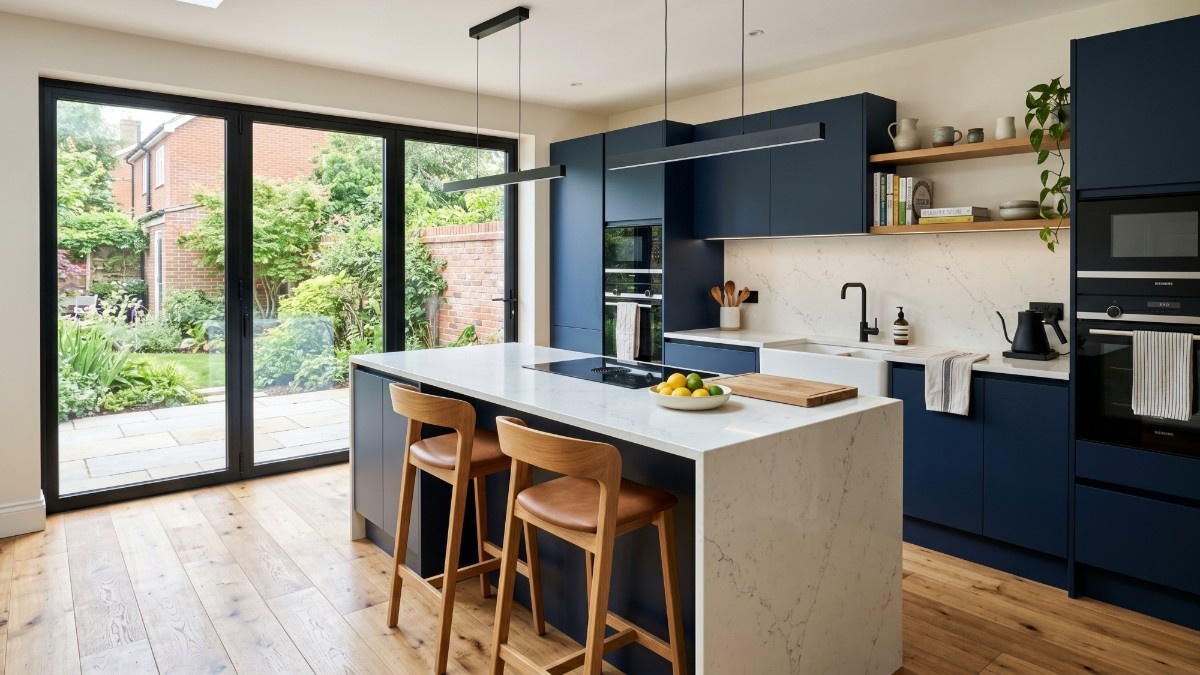
Here's a number worth opening with: the price of a kitchen renovation is 22% higher than it was in 2019, according to Which?, using cost data from BCIS (the Building Cost Information Service of RICS). The better news? That rise has finally slowed. So what should a London homeowner actually budget in 2026?
It depends almost entirely on one thing most cost guides skate over: scope. The glossy "from £5,000" headline you've seen advertised is the cost of cabinets in a box. A finished kitchen in a London terrace, with the plastering, electrics, plumbing and flooring that go around it, is a different animal entirely.
This guide gives you the honest, London-specific picture by tier, where every pound goes, the hidden costs that catch people out, and what a new kitchen does to your home's value. For the full service, see Buildaway's kitchen design and fit-out service.
In 2026, a new kitchen typically costs £10,000–£20,000 for a mid-range layout and £40,000–£100,000 for a premium open-plan renovation. London projects run higher due to elevated labour rates and access challenges, following a 22% rise in kitchen costs since 2019. A new kitchen can add 5–15% to a property's value depending on the structural scope.
How Much Does a Kitchen Renovation Cost in London in 2026?
A new kitchen typically costs £10,000–£20,000 for a mid-range fitted kitchen and £40,000–£100,000 for a premium, open-plan renovation in 2026, with around 10% of homeowners spending over £50,000 (HomeOwners Alliance, 2026; Homebuilding & Renovating, 2026). London projects generally sit above these national figures, for reasons we'll get to.
The range is huge because a "kitchen" can mean four very different things. Below is how those tiers break down. The unit-only figures cover supplying flat-pack cabinets and appliances; the fitted and premium figures cover a complete, installed kitchen including labour and VAT.
| Kitchen Tier | Typical UK Cost (2026) | What You Get |
|---|---|---|
| Units only (flat-pack supply) | £3,300–£9,100 | Cabinets & basic appliances, small to large; no fitting |
| Mid-range fitted kitchen | £10,000–£20,000 | Made-to-order units, design service, supply & full installation |
| Premium / open-plan renovation | £40,000–£100,000 | Building work, flooring, electrics & decoration as well as the kitchen |
| Bespoke handmade kitchen | £60,000+ | Genuinely bespoke British cabinetry, even for smaller rooms |
Sources: HomeOwners Alliance, 2026; Homebuilding & Renovating, 2026. Figures are UK-wide; London typically runs higher.
Kitchen Cost by Tier (UK, 2026)
Sources: HomeOwners Alliance, 2026; Homebuilding & Renovating, 2026. Bar width scaled to the top of each range.
Most London homeowners we speak to land in the £15,000–£35,000 band: a quality fitted kitchen with a few walls touched, some new flooring, and the electrics brought up to standard. If you're knocking through to create a kitchen-diner, you're into renovation territory, and the budget moves accordingly.
Where Does the Money Actually Go?
Cabinetry is the single biggest line in a kitchen budget, often up to half of a bespoke project, while labour typically accounts for 20–30% of the total and plumbing, flooring and electrics add roughly another 30% combined (Which?, 2026; Homebuilding & Renovating, 2026). In other words, the units are only part of the story.
This is the single most useful thing to understand before you compare quotes. When you see a kitchen advertised "from £5,000", that's the cabinet carcasses and doors, not the fitter, the electrician, the plasterer, the worktop template and install, or the VAT. The finished room is a team effort.
Where a Typical Mid-Range Kitchen Budget Goes
Buildaway guidance, consistent with Which? and Homebuilding & Renovating ranges (labour 20–30%; cabinetry the largest single line). Splits vary by project.
What about the cabinets themselves?
Cabinet prices vary wildly by brand. Which? priced an identical 12-unit kitchen across major suppliers in May 2025 and found a striking spread, from budget flat-pack to premium fitted:
| Supplier | 12-Unit Kitchen (units, May 2025) |
|---|---|
| IKEA | £1,500–£2,500 |
| Benchmarx | £2,500–£4,500 |
| B&Q | £4,000–£5,000 |
| Magnet | £7,000–£9,000 |
Source: Which?, May 2025 (units only; excludes worktops, appliances and fitting).
Why Is a Kitchen More Expensive in London?
London kitchens consistently land above UK averages, and in our experience quoting across the capital the gap is real and predictable. It isn't markup for its own sake. It's a stack of genuine, location-specific costs that simply don't exist, or cost far less, outside the M25.
Here's what pushes a London kitchen above the national figures you'll read elsewhere:
- Trade day-rates Skilled London fitters, electricians and plumbers command higher daily rates than the national average, and a full kitchen needs several of them over three to four weeks.
- Access and parking Terraced streets, controlled parking zones, and permit costs all add time and money before a single unit is hung.
- Congestion and ULEZ (Ultra Low Emission Zone) charges Daily charges for vans working in central and inner London add up across a multi-week project.
- Waste disposal Skip permits and tighter disposal rules make clearing an old kitchen more expensive in the capital.
- Period-property care Many London homes are Victorian or Edwardian, with uneven walls, lath-and-plaster, and quirks that take longer to do properly.
What's Included in a Kitchen Quote, and What Isn't?
The advertised price of a kitchen almost always covers units only, not the finished room. Labour, worktops, appliances, flooring, electrics and VAT can together cost more than the cabinets themselves (Which?, 2026). Before you compare two quotes, you have to know you're comparing the same scope, otherwise the cheapest number is meaningless.
What a complete kitchen quote should cover:
- Removing and disposing of the existing kitchen
- Supply and installation of units, doors and handles
- Worktops, templated and fitted (laminate, solid surface, quartz or stone)
- Appliance installation and connection
- Plumbing for sink, dishwasher and any appliance moves
- Electrical work, including sockets, lighting and certification
- Plastering and making good walls and ceilings
- Flooring, tiling and final decoration
- VAT at 20%
Most domestic kitchen work attracts VAT at the standard 20% rate (gov.uk). On a £20,000 kitchen, that's £4,000. Always ask whether a headline figure includes VAT before you compare it with another. Every Buildaway quote states it plainly.
What's often left out, and can add 10–20% to a low headline price:
- Worktops and upstands (sometimes quoted separately)
- Appliances, if you're expected to supply your own
- Plastering, flooring and decoration, treated as a separate trade
- Electrical certification under Part P (the section of the Building Regulations governing electrical safety in dwellings)
- Structural work, if a wall is coming out for an open-plan layout
Do you need Building Regulations approval?
A like-for-like kitchen swap rarely needs approval, but the electrical work falls under Part P of the Building Regulations (electrical safety in dwellings) and must be done or certified by a competent person (Planning Portal). Removing a wall, moving drainage, or forming a structural opening for a kitchen-diner does require Building Regulations sign-off, and sometimes a structural engineer. It's one more reason the open-plan tier costs what it does.
How Should I Split My Kitchen Budget?
A sensible kitchen budget allocates the bulk to cabinetry and labour, keeps appliances and worktops proportionate, and holds back a contingency of at least 15% for the surprises older homes always throw up (Which?). Set the range before you request quotes, not after, because that's how you avoid being talked upward line by line.
A practical starting framework for a London kitchen looks like this:
| Budget Category | Typical % of Total |
|---|---|
| Cabinets, units and worktops | 40–50% |
| Labour and installation | 20–30% |
| Appliances | 10–15% |
| Plumbing, electrics, flooring and finishing | 10–15% |
| Contingency (treat it as already spent) | Minimum 15% |
One golden rule from the consumer experts: try not to spend more than 5–10% of your home's current value on the kitchen (Which?, January 2026). On an £600,000 London home, that's roughly £30,000–£60,000, which neatly explains why so many capital kitchens land in the premium tier. Thinking of going further? A kitchen extension in London changes the maths again.
Has the Cost of a Kitchen Gone Up, and Is Now a Good Time?
Kitchen costs are 22% higher than they were in 2019, an average annual rise of 5.1% over four years, according to Which? using BCIS data (Which?, 2026). But here's the turn: kitchen material prices rose just 1.7% in the year to September 2025, the lowest rate since the pandemic (Which?, citing the Construction Products Association).
So while a kitchen costs meaningfully more than it did before Covid, the steep year-on-year increases have flattened out. For anyone who's been putting off a renovation, 2026 is a calmer time to budget than the past few years.
Annual Rise in Kitchen Renovation Costs
Year-on-year increase, 2019–2023 - Which? / BCIS data
Source: Which?, kitchen cost data from BCIS (RICS); inflation context from the ONS. Cumulative rise 2019–2023: 22%.
For the wider picture on construction prices, the Office for National Statistics publishes the inflation indices these figures are built on.
Will a New Kitchen Add Value to My London Home?
A non-structural kitchen replacement can add 5–10% to a property's value, while a structural renovation that adds space, such as a kitchen extension, can add 10–15% (Which?, January 2026). The kitchen is the room buyers judge a home by, so a tired one quietly drags down every viewing.
Two honest caveats are worth holding onto. First, cost doesn't equal value, you won't always recoup pound for pound, especially at the luxury end. Second, every street has a price ceiling. If comparable homes on your road already sell with smart kitchens, you're protecting value rather than adding a premium. Check recent sold prices before you commit.
If your kitchen is part of a larger project, it may sit inside a full property refurbishment, where the same trades and access costs are shared across rooms. And if you're weighing a kitchen against other big-ticket improvements, our guide to loft conversion costs in London covers the strongest space-adding alternative.
Ready to find out what your kitchen will actually cost? Get a clear, itemised Buildaway quote, no guesswork, no hidden extras.
Request a free itemised quote →Frequently Asked Questions
How much does a kitchen renovation cost in London in 2026?
A new kitchen typically costs £10,000–£20,000 for a mid-range fitted kitchen and £40,000–£100,000 for a premium, open-plan renovation in 2026. Around 10% of homeowners spend over £50,000. London projects generally sit above these national figures because labour rates and site access cost more in the capital. (HomeOwners Alliance, 2026; Homebuilding & Renovating, 2026)
What is the average cost of a new kitchen in the UK?
The average new kitchen in the UK costs between £10,000 and £20,000, according to the HomeOwners Alliance. That figure covers removing the old kitchen and supplying and fitting new units, worktops, appliances, flooring and decoration. Around 10% of homeowners spend more than £50,000 on a kitchen project. (HomeOwners Alliance, 2026)
How much of a kitchen budget is labour?
Labour usually accounts for 20–30% of a kitchen's total cost, with plumbing, flooring and electrics adding roughly another 30% combined, according to Which?. Cabinetry is the single largest line, often up to half of a bespoke project. The advertised "from £5,000" price almost always covers units only, not the finished room. (Which?, 2026; Homebuilding & Renovating, 2026)
Do I need Building Regulations approval for a new kitchen?
A like-for-like kitchen swap rarely needs approval, but the electrical work falls under Part P of the Building Regulations (electrical safety in dwellings) and must be carried out or certified by a competent person. Removing a wall, moving drainage, or adding a structural opening for an open-plan layout does require Building Regulations sign-off. VAT at 20% also applies to most domestic kitchen work. (Planning Portal; gov.uk)
Does a new kitchen add value to my home?
A non-structural kitchen replacement can add 5–10% to a property's value, while a structural renovation that adds space, such as a kitchen extension, can add 10–15%, according to Which? in January 2026. Cost doesn't equal value, so it's sensible not to spend more than 5–10% of your home's value on the kitchen. (Which?, January 2026)