
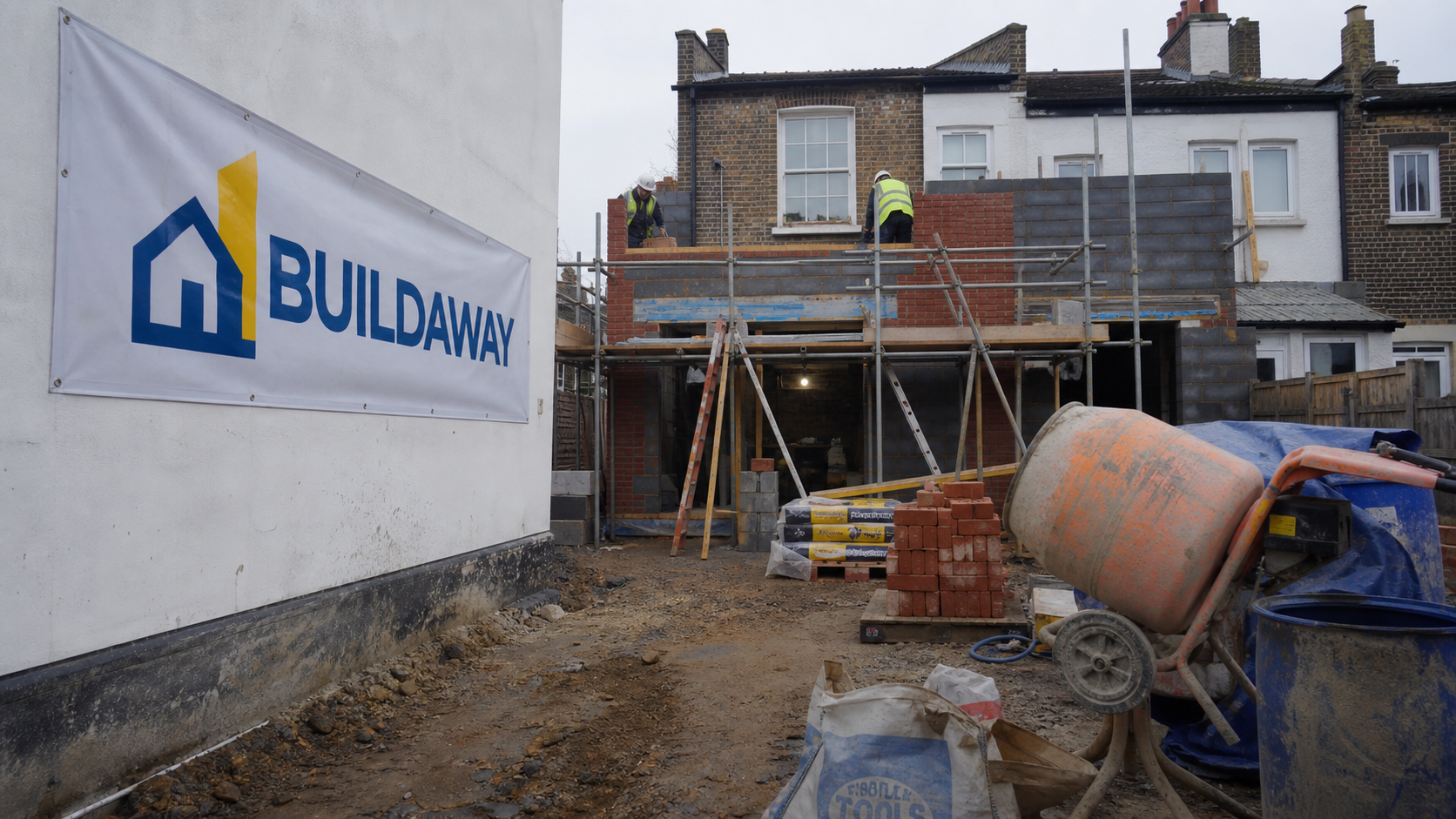
The average cost of moving house in London reached £32,786 in 2025 - a 27% jump in a single year, driven largely by stamp duty reverting to lower thresholds in April (reallymoving.com, Nov 2025). That figure doesn't include what you'll spend furnishing a new place, disrupting your children's schools, or losing the garden you spent three summers getting right.
Space is London's most expensive commodity. Whether you own a Victorian terrace in Tufnell Park (N7), a 1930s semi in Bromley (BR1), or a two-bed that's outgrown itself near Clapham Common (SW4), the question is the same: stay and extend, or sell and move?
For most London homeowners in 2026, extending makes the stronger financial and practical case. This guide covers everything - extension types, realistic costs, planning rules by borough, building regulations, ROI data, and how to choose a contractor you can trust.
What Types of Home Extension Can I Build in London?
There are six main types suited to London properties. The right choice depends on your house type - terrace, semi-detached, or detached - the available land you have, and the planning constraints specific to your borough. Not every option suits every postcode.
Rear Extension
The rear extension is the most common type across London. It pushes the ground floor footprint into the back garden, typically opening a dark, narrow kitchen into a full-width kitchen-dining-living space. Depths range from 3m on a standard Victorian terrace to 6m+ on detached houses where the plot allows.
Rear extensions dominate in inner south London - SE5 (Camberwell), SE22 (East Dulwich), SE15 (Peckham), SE1 (Bermondsey) - where tight Victorian terrace plots still offer workable garden depth. Done well, they transform how a home functions day-to-day.
Side Return Extension
The side return fills the narrow alleyway that runs beside most Victorian and Edwardian terraced houses. It's typically 1–2m wide and adds that width across the full depth of the kitchen, turning what's often a cramped galley into a proper open-plan space.
This type is especially popular in N1 (Islington), N16 (Stoke Newington), and W4 (Chiswick), where terrace stock is dense and the side return gap is almost universal. It's rarely the most dramatic transformation on its own - but paired with a rear extension, it becomes the wraparound.
Wraparound Extension
The wraparound combines a rear extension with a side return infill for the maximum possible ground-floor footprint. It's the premium choice when you want to completely reimagine the back of a house. The result is typically a wide, south-facing kitchen-diner with full bi-fold or sliding doors onto the garden.
Demand is strongest across SW postcode zones: SW12 (Balham), SW4 (Clapham), SW11 (Battersea), and SW15 (Putney). These areas combine generous Victorian terrace stock with high property values, which means the ROI on a wraparound tends to be particularly strong.
Double Storey Extension
A double storey extension adds space on both the ground and first floor - giving you, for example, a larger kitchen below and an extra bedroom or bathroom above. It almost always requires full planning permission. That said, it's the most cost-efficient way to add significant square footage, because the foundations and roof serve both levels.
Double storey extensions are more practical in outer London, where plots are larger and planning constraints less severe: BR1 (Bromley), BR3 (Beckenham), SE9 (Eltham), TW9 (Richmond), SM1 (Sutton), and DA15 (Sidcup).
Over-Structure and Garage Extension
Building above an integral or attached garage adds a bedroom, home office, or en-suite without touching the garden at all. It's common on 1930s–1950s semi-detached and detached houses across zones 3–5: HA1 (Harrow), UB3 (Hayes), N20 (Barnet), and NW9 (Kingsbury). Structural feasibility depends on whether the existing garage walls can carry the additional load - always confirm with a structural engineer first.
Infill Extension
An infill extension fills an awkward corner plot, an L-shaped garden return, or a gap between sections of a house. It's a specialist solution, most commonly found in conservation-heavy boroughs like Kensington & Chelsea (W8, W11), Camden (NW3, NW1), and Richmond-upon-Thames (TW10, TW9). Design quality matters more here than anywhere else - local planning teams scrutinise infill schemes closely.
Need professional help with your extension?
Explore Buildaway's comprehensive design-and-build services for London properties.
How Much Does a Home Extension Cost in London in 2026?
A single-storey rear extension in London costs £45,500–£110,500 depending on size and specification - that's a cost per m² ranging from £2,340 for a basic build to £5,200+ for a high-spec glazed extension (FMB Build Cost Data, 2025; RICS BCIS, 2025). Inner London (zones 1–2) typically runs 10–15% above those figures due to higher labour costs, access restrictions, and congestion charges.
Cost by Extension Type
| Extension Type | Build Cost (London 2026) | All-in Budget (inc. fees + contingency) |
|---|---|---|
| Single-storey rear | £45,500–£110,500 | £65,000–£140,000 |
| Side return | £35,000–£75,000 | £50,000–£95,000 |
| Wraparound | £60,000–£110,000 | £80,000–£135,000 |
| Double storey | £80,000–£150,000 | £105,000–£190,000 |
| Kitchen extension | £40,000–£80,000 | £55,000–£105,000 |
Sources: FMB Build Cost Data 2025; RICS Building Cost Information Service 2025
What Drives Cost Up in London?
Several London-specific factors push build costs above national benchmarks.
Zone 1–2 labour premium. Labour costs in WC1, EC1, W1, and SW1 run 10–15% above zone 3–5 equivalents. Parking, congestion charges, and restricted delivery windows all add cost to any project inside the North or South Circular. If your property is in Mayfair (W1), Pimlico (SW1), or Bermondsey (SE1), budget accordingly.
Conservation area materials. Matching original London stock brick in areas like Hampstead (NW3), Notting Hill (W11), or Dulwich Village (SE21) costs considerably more than standard brick. Local planning conditions often specify exact brick types and mortar mixes, so the material choice isn't yours alone.
Party wall costs. Victorian terraces in E1 (Stepney), N1 (Islington), SE1 (Bermondsey), and SW4 (Clapham) almost always trigger the Party Wall etc. Act 1996. Budget £700–£2,000 per neighbouring property for a party wall surveyor.
Victorian outriggers. Many SE and SW zone terraces have a rear outrigger - a narrow Victorian back extension. Demolishing or building over this often reveals shallower-than-expected foundations, requiring underpinning and additional steelwork before the new extension can start.
Fees to Budget Alongside Build Cost
These aren't optional. They apply to almost every London extension project.
| Fee | Typical Range |
|---|---|
| Architect / designer | 8–12% of build cost |
| Structural engineer | £800–£2,500 |
| Planning application | £206 (householder, gov.uk) |
| Building regulations | £400–£2,000 |
| Party wall surveyor | £700–£2,000 per neighbour |
| Contingency | 10–15% of build cost |
In London, a well-executed extension adds approximately £4,000 per m² to property value - double the national average of £2,000/m² (MyJobQuote, 2025). That's why the all-in investment often makes sense even when the headline number looks large.
- Inner North (N1, N7) & Inner South (SE5, SE15): £3,100–£4,400 per m²
- South-West (SW4, SW11, SW12): £3,400–£4,800 per m²
- Outer South-East & South-West (BR1, BR3, SM1, TW9): £2,400–£3,600 per m²
Always budget a 10–15% contingency - London projects rarely run without surprises.
Do I Need Planning Permission for a Home Extension in London?
Not always. Many London home extensions fall within Permitted Development (PD) rights and do not require a planning application. That said, London is more restricted than most of England - a significant proportion of properties across inner boroughs fall within conservation areas or face Article 4 directions that remove standard PD rights entirely (Planning Portal, 2025).
What Qualifies as Permitted Development?
For most houses in England that aren't flats, listed buildings, or in designated areas, single-storey rear extensions are PD if they meet all of the following:
- Max depth: 3m beyond the rear wall for a terraced or semi-detached house; 4m for a detached house
- Larger extensions: Between 3–6m (terrace/semi) or 4–8m (detached) require Prior Approval - a 42-day neighbour consultation process, not a full planning application
- Max eaves height: 3m if within 2m of a boundary
- Max overall height: 4m
- No extension beyond the principal elevation facing a highway
- Not a flat, listed building, or property in a conservation area or National Park
Those Prior Approval numbers matter. If you're extending beyond the 3m or 4m standard limits, you apply to the council, notify neighbours, and wait 42 days. It costs £96 and is far lighter than full planning permission - but it's still a step you can't skip.
London Boroughs with Strict Planning Restrictions
Article 4 directions remove standard PD rights in specific areas. London uses them extensively, particularly in inner boroughs with dense Victorian housing stock.
| Borough | Affected Areas & Postcodes | Common Restriction |
|---|---|---|
| Camden | Kentish Town (NW5), Bloomsbury (WC1) | Rear dormers, roof extensions |
| Islington | Highbury Hill (N4), Barnsbury (N1) | Rear alterations on terraces |
| Hackney | Clapton (E5), London Fields (E8) | Victorian terrace controls |
| Richmond-upon-Thames | Kew (TW9), St Margarets (TW1) | Strict conservation rules |
| Kensington & Chelsea | Notting Hill (W11), Kensington (W8) | Nearly all alterations need permission |
| Tower Hamlets | Whitechapel (E1), Stepney Green (E1) | Conservation area controls |
Source: Planning Portal and London borough planning portals, 2025
Even outside Article 4 zones, conservation areas apply their own restrictions. Camden, Islington, Southwark, Wandsworth, and Lambeth all contain large conservation zones - many homeowners in SE5, SW9, and NW1 discover this when they first speak to a planner.
Lawful Development Certificate - Why It's Worth Getting
Even when your project qualifies as permitted development, applying for a Lawful Development Certificate (LDC) is strongly recommended. The cost is £103 - half the planning application fee. Why bother?
Solicitors ask for it when you sell. Mortgage lenders ask for it when you remortgage. Without it, proving the extension was lawful becomes your problem, not theirs. It takes a few weeks and costs very little. Don't skip it.
What's the Planning and Build Process - Step by Step?
A permitted development extension in London takes 14–18 weeks from design to completion. A project requiring full planning permission takes 20–26 weeks. The planning application decision typically arrives within 8 weeks - DLUHC data shows 93% of householder applications are decided within the agreed period (2025).
The 7 Stages of a London Home Extension
Stage 1 - Initial feasibility (Weeks 1–2)
Site visit, budget discussion, and planning constraints check. Before anything else, check
your property against your borough's conservation area map and Article 4 boundaries at planning.london.gov.uk. This
takes 20 minutes and can prevent months of delay.
Stage 2 - Architectural design (Weeks 2–6)
Drawings, 3D visuals, and material specifications. Matching Victorian stock brick for
Hackney (E8) or Bromley (BR1) takes longer to source and specify than modern materials. Good
design work at this stage saves considerably more than it costs.
Stage 3 - Planning application or PD confirmation (Weeks 4–12)
If full planning is needed, submit via the Planning Portal. The application
fee is £206 for a householder application (gov.uk, 2025). If you're going
the PD route, this is when you apply for the Lawful Development Certificate.
Stage 4 - Building regulations (parallel track, Weeks 4–14)
Structural engineer appointed. Building regs drawings submitted to your Local Authority
building control or an approved inspector. This runs in parallel with planning, not
sequentially. Don't wait for planning approval before starting the structural work.
Stage 5 - Party wall notices (Weeks 4–8)
Serve notices at least two months before construction begins if you're building on or near
the party wall. Required in most London terraces - so if your home is in N1, SE15, W4, or
SW11, assume you'll need to do this. Neighbour agreement takes 1–12 months in complex cases;
budget the time.
Stage 6 - Construction (Weeks 10–24 on site)
Typical site time is 10–16 weeks for single-storey, 14–18 weeks for double storey. That's
weather-dependent and subject to material lead times. In London, site access, delivery
windows, and neighbour relations all affect the programme.
Stage 7 - Completion certificate (final week)
A building control inspector signs off at key stages and issues the completion certificate
on final inspection. Keep it permanently. Solicitors and mortgage lenders require it on any
future sale or remortgage.
Ready to start your home extension journey?
Get a free feasibility check and direct estimation quote for your London property.
Request Your Quote ConsultationHow Much Value Does a Home Extension Add in London?
A well-executed home extension in London typically adds 10–20% to property value, returning £1.20–£1.50 for every £1 spent (FMB / HomeOwners Alliance, 2025). In London - where the average existing property price sits at £633,000 (ONS, 2024) - a 10% uplift alone represents over £63,000 in added value. On a £700,000 home in SE22 or SW12, that's £70,000–£140,000.
ROI by Extension Type
| Extension Type | Typical Value Uplift | Primary Driver |
|---|---|---|
| Kitchen-diner extension | 10–15% | Most in-demand feature for London buyers |
| Wraparound extension | 10–15% | Maximum ground-floor transformation |
| Double storey | 15–20% | Adds bedroom count, critical in zones 2–3 |
| Loft conversion + extension | 20–30% | Highest combined uplift |
| Side return only | 5–10% | Space gain without bedroom addition |
Sources: FMB / HomeOwners Alliance, 2025
Extend vs Move - The London Numbers (2025)
The average cost of buying and selling a home in London hit £32,786 in 2025 - a 27% increase year-on-year. That figure breaks down as: £21,750 in stamp duty (based on a median £635,000 purchase price), £6,887 in estate agent fees, and £2,859 in conveyancing costs (reallymoving.com, Nov 2025). Add solicitors, removals, storage, and the inevitable redecoration of a new property, and you're looking at £35,000–£40,000 in friction costs before you've gained a single square metre.
Against that, a well-specified wraparound extension at £90,000 adds immediate living space and long-term capital value. For a homeowner in SW12 (Balham) or SE22 (East Dulwich) with a £700,000 property, that same £90,000 extension could add £70,000–£105,000 in market value - and you keep the school catchment, the commute, the community.
The long-term case is strong too. 61% of UK homeowners who renovate plan to stay in their home for at least 11 years after completion (Houzz UK Survey, 2025). The financial return isn't only about resale value - it's about years of better daily living.
In 2025, Buildaway completed a wraparound extension on a Victorian terrace home in SE15 (Peckham). The project cost £94,000 all-in (including design, engineering, party wall fees, and VAT) and took 19 weeks from initial feasibility check to the final completion certificate. Following the build, the homeowner's estate agent valued the property at £85,000 more than its pre-works valuation. More importantly, it gave the family a 32m² open-plan kitchen-diner without losing their garden.
| Region & Est. Property Value | Est. Moving Cost (Fees + Stamp Duty) | Est. Rear Extension Cost | Est. Added Value (Uplift) | Net Financial Position | Break-Even Period |
|---|---|---|---|---|---|
| Inner London (Zones 1-2) e.g., N1, SW9, E2 (£600k) |
~£28,000 | ~£75,000 | £60,000–£90,000 | +£13,000 to +£43,000 vs Moving friction | 2–3 years of standard growth |
| Outer London (Zones 3-6) e.g., BR2, SM1, TW9 (£450k) |
~£18,000 | ~£65,000 | £45,000–£65,000 | +£2,000 to +£18,000 vs Moving friction | 3–4 years of standard growth |
Which London Areas Have the Highest Demand for Home Extensions?
Demand for home extensions is highest across inner south London (SE postcodes), the north London Victorian terrace belt (N zones), and mid-outer London suburbs with large 1930s housing stock across BR, TW, SM, and HA postcode areas. That's where the property type, plot depth, and price levels combine to make extending the rational choice.
Inner South London (SE1, SE5, SE15, SE22, SE24)
From Bermondsey (SE1) to Peckham (SE15) to Herne Hill (SE24), this belt of dense Victorian terrace stock is the busiest area for rear and side return extensions in London. Properties near London Bridge (SE1), Peckham Rye Park (SE15), and Brockwell Park (SE24) sit in competitive markets where a well-executed extension justifiably commands a premium.
Inner North London (N1, N4, N7, N16, NW1, NW3)
Islington (N1), Tufnell Park (N7), Stoke Newington (N16), and Hampstead (NW3) are all prime extension territory - but all require careful planning checks. Barnsbury (N1), Highbury Hill (N4), and the Dartmouth Park conservation area (NW5) have Article 4 restrictions that require full planning even for modest rear extensions. Get the constraints check done first.
West and South-West London (SW4, SW11, SW12, W4, W6)
Clapham (SW4), Battersea (SW11), Balham (SW12), Chiswick (W4), and Hammersmith (W6) are strong wraparound extension markets. Many properties back onto south-facing gardens, which makes the case for a full-width kitchen-diner opening compelling both functionally and financially.
Outer South-East London (BR1, BR2, BR3, SE9, SE12)
Bromley (BR1), Beckenham (BR2), Bickley (BR1), Eltham (SE9), and Blackheath (SE3) offer larger plots and more generous permitted development rights than anywhere in zones 1–2. Double storey extensions are more viable here. Planning friction is lower, and the 1930s–1950s housing stock is well-suited to significant extension.
Outer South-West and Surrey Borders (SM1, SM2, KT1, KT6, TW9)
Sutton (SM1), Cheam (SM2), Kingston (KT1), Surbiton (KT6), and Richmond (TW9) have strong family housing demand and relatively low planning friction in most areas. Note that Richmond-upon-Thames has significant conservation restrictions around TW9 and TW10 - always check the borough planning map before assuming PD applies.
Outer North-West London (HA1, HA2, UB3, NW9)
Harrow (HA1, HA2), Northolt (UB3), and Kingsbury (NW9) have large semi-detached 1950s–1970s stock well-suited to rear double storeys and over-structure garage extensions. Property values are lower here, so the extend-vs-move calculation is tighter - but for families needing more space, it frequently still makes sense.
What Building Regulations Apply to London Home Extensions?
All home extensions in London must comply with Building Regulations - regardless of whether planning permission was required. Building control approval confirms your extension is structurally sound, energy-efficient, and fire-safe. Failure to obtain it can block a future property sale, void your home insurance during works, and - in serious cases - require costly remediation.
The Key Regulations That Affect London Extensions
Part A (Structure) covers foundations, load-bearing walls, and steelwork. Victorian terraces in SE, N, and E zones often have shallower foundations than modern standards require. A structural engineer will assess this at Stage 2 and specify any additional groundworks needed.
Part B (Fire safety) addresses escape routes and fire doors. It affects how the new extension connects to the existing house - particularly the route from upstairs bedrooms to an exit. This isn't optional, and it's not something to sort out after the walls go up.
Part L (Energy efficiency) requires new extensions to meet minimum thermal performance standards. Double-glazed rooflights, insulated walls, and insulated floor slabs are standard on every Buildaway project. Getting Part L right also protects your SAP/EPC rating - increasingly important for sale and remortgage.
Part F (Ventilation) requires openable windows or mechanical ventilation. Glazed kitchen extensions - common across SW and SE zones - can overheat without adequate ventilation. It's worth discussing ventilation strategy with your architect early, not retrofitting a solution later.
Part P (Electrical) means all electrical work must be certified by an electrician registered with NICEIC or NAPIT. Ask for the electrical installation certificate at practical completion - it's another document solicitors will request.
How Do I Choose the Right Home Extension Contractor in London?
In London's competitive construction market, choosing the right contractor is the highest-risk decision in the project. The wrong choice costs money, time, and - in serious cases - requires demolition and rework. Look for a company with verifiable reviews, relevant trade memberships, full insurance, and genuine experience in your property type and borough.
The 7-Point Contractor Checklist for London Homeowners
1. Verified reviews with geographic relevance. Look for 4.5★ or above on Google or Checkatrade with 30+ reviews. Volume matters - but so does recency and location. Reviews for rear extension projects in Bromley or kitchen extensions in Clapham are more useful than generic five-star feedback from two years ago.
2. Federation of Master Builders (FMB) membership or LABC Registered Partner status. Both signal adherence to quality standards and access to an independent dispute resolution scheme. It won't guarantee a perfect project, but it raises the floor significantly.
3. Full public liability insurance - minimum £5m. Request the certificate before signing anything. Don't accept verbal assurance. In London, where party wall disputes and adjacent property damage are genuine risks, £2m coverage isn't enough.
4. Architectural design capability. Can the contractor produce planning drawings and building regulations drawings in-house, or will you need to source an architect separately? Design-and-build companies tend to deliver more cohesive results because the design is coordinated with buildability from the start.
5. Party wall experience. Any company that's been working in London terraces for more than a couple of years should have handled dozens of party wall awards. Ask directly. If they're vague about the process, that's a signal.
6. Fixed-price quote with a payment schedule. Stage payments tied to construction milestones protect you if the project stalls. Avoid contracts that ask for large upfront payments or that don't specify what triggers each payment.
7. Aftercare and a defect liability period. A 12-month defect period with a named point of contact is industry standard. Any reputable London contractor should offer this without hesitation.
At Buildaway, every project starts with a planning constraints check - Article 4 status, conservation area boundaries, and PD allowances used since 1948. It takes 20 minutes. That check has saved multiple clients months of wasted architect fees and abortive planning applications.
Contact us for a free home extension consultation in London.
Book Your Free Consultation & Quote
Planning a home extension or renovation in London? Fill out the form below to schedule a free, no-obligation site visit. We'll review your project requirements and provide a transparent, detailed quote.
Frequently Asked Questions
How much does a home extension cost in London in 2026?
A single-storey rear extension costs £45,500–£110,500 in construction costs alone, rising to £65,000–£140,000 all-in once architectural fees (8–12% of build cost), structural engineering (£800–£2,500), building regulations (£400–£2,000), and a 10–15% contingency are included. Double storey extensions range from £105,000–£190,000 all-in (FMB / RICS, 2025). Inner London (zones 1–2) runs 10–15% above these figures.
Do I need planning permission for a home extension in London?
Not always. Single-storey rear extensions up to 3m deep (terraced/semi) or 4m deep (detached) typically qualify as Permitted Development - no application required. However, many inner London properties fall within conservation areas or Article 4 directions that remove standard PD rights. In inner London boroughs, an estimated 35–40% of extension projects require full planning permission (Planning Portal, 2025). Always check your borough before starting.
How long does a home extension take in London?
From initial feasibility to completion certificate, a permitted development extension takes 14–18 weeks. A project requiring full planning permission takes 20–26 weeks - the planning decision alone accounts for up to 8 weeks, though DLUHC data shows 93% of householder applications are decided within the agreed period (2025). Double storey extensions sit at the longer end of each range.
How much value does a home extension add in London?
A well-executed extension adds 10–20% to London property values, returning £1.20–£1.50 for every £1 spent in construction costs (FMB / HomeOwners Alliance, 2025). On a £700,000 London home, that's £70,000–£140,000 in added value. Kitchen-diner extensions and double-storey additions deliver the highest returns. In London specifically, extensions add around £4,000 per m² in value - double the national average (MyJobQuote, 2025).
Is it better to extend or move house in London in 2026?
For most London homeowners, extending is now the stronger financial case. Moving costs hit an average of £32,786 in London in 2025 - including £21,750 in stamp duty alone on a median £635,000 purchase - a 27% year-on-year increase (reallymoving.com, Nov 2025). A well-designed extension in the same budget adds permanent space, long-term value, and - crucially - you keep the neighbourhood, school catchment, and community you've already built.
Conclusion
Extending a London home in 2026 is, for most homeowners, both financially rational and practically achievable. The numbers are clear: moving costs are at record highs, extension returns are strong, and 89–90% of householder planning applications across England are approved (DLUHC, 2025).
Here are the five things to take from this guide:
- Extension costs: £45,000–£160,000+ all-in in London in 2026 depending on type and spec - inner zones run 10–15% above outer zone prices
- Planning: Many extensions qualify as Permitted Development, but check your borough's conservation area and Article 4 status before assuming - get an LDC even when it isn't legally required
- ROI: A well-executed extension returns £1.20–£1.50 per £1 spent; kitchen-diners and bedroom-adding double storeys deliver the highest uplifts
- Building regulations: Required on every extension regardless of planning status - don't start without them
- Contractor selection: Verified reviews, FMB membership, £5m+ public liability insurance, and a fixed-price contract are the four non-negotiables
Ready to explore what's possible with your London home? Buildaway offers free initial consultations across London - get in touch with our team. We've delivered extensions across SE, SW, N, BR, TW, and HA postcode zones. You can also see completed London extension projects in our portfolio.
Cormac Hegarty is the Founder of Buildaway and a residential construction specialist with an extensive portfolio of projects across London. Buildaway delivers home extensions, renovations, and full property refurbishment London services across the capital.