
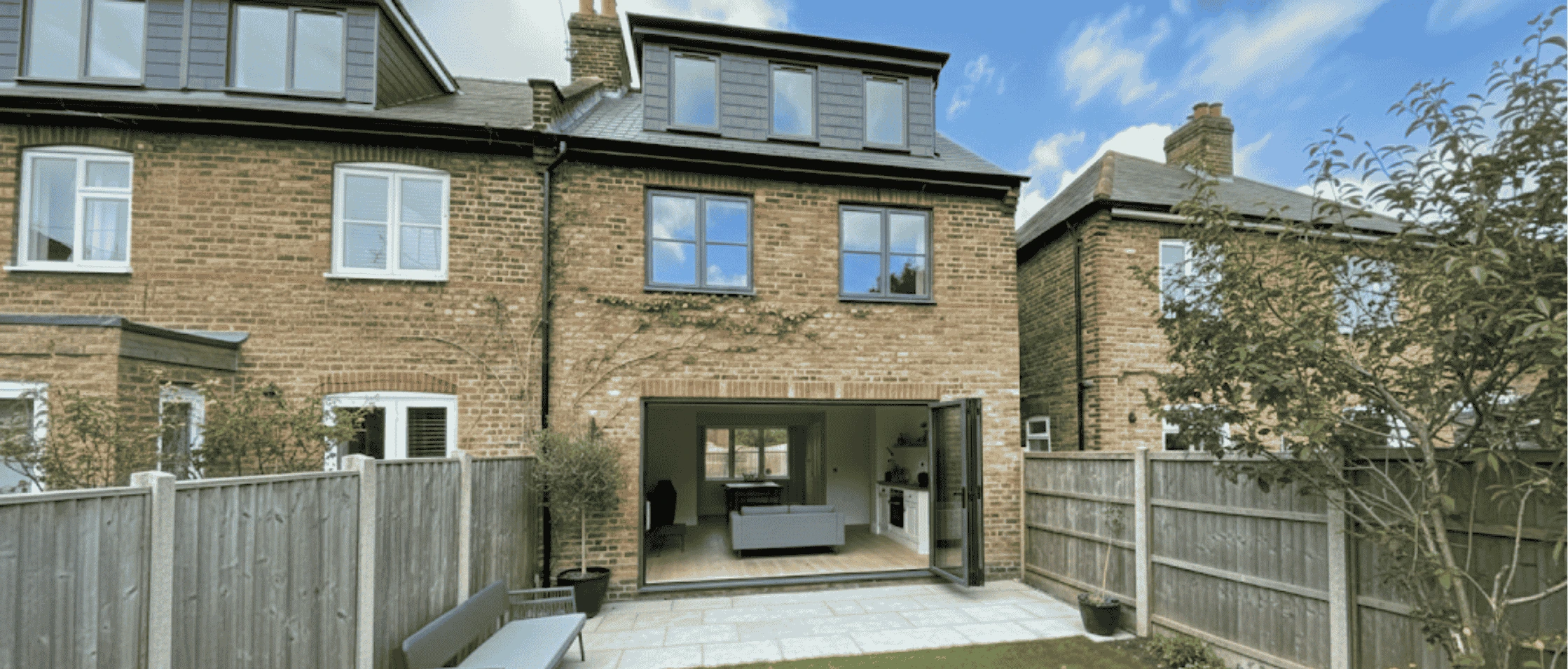
According to Nationwide's October 2025 House Price Index research, a loft conversion adding a bedroom and bathroom to a three-bedroom London home can increase its value by up to 24%. That's a compelling number. But here's the reality that follows: the cost to get there ranges from £18,000 to over £160,000 in London in 2026. The gap is enormous and it's not arbitrary.
Three things drive it more than anything else: the type of conversion you choose, the structure of your existing roof, and how close you are to a conservation area. Most cost guides either quote national averages that bear no relation to London prices, or bury the actual numbers in jargon. This guide won't do that. For more information, read about Buildaway's loft conversion service.
What follows is Buildaway's honest, London-specific breakdown by conversion type, by what's typically included and excluded in a quote, and by the hidden costs that catch homeowners off guard mid-build.
London loft conversions cost £18,000–£160,000+ in 2026. Dormer conversions the most common choice for London terraces typically run £55,000–£120,000. A well-executed conversion with bedroom and bathroom can add up to 24% to a London home's value (Nationwide, Oct 2025). Costs vary significantly by roof type, so a site inspection is the only way to get an accurate quote. At Buildaway, that assessment is always free.
What Are the Different Types of Loft Conversion?
There are five main types of loft conversion used on London homes. Each suits different property types, budgets, and roof structures. Getting the type right at the start is the single biggest factor in controlling what you'll spend.
- Velux / Rooflight The least structural work. Windows are installed into the existing roofline without changing the roof shape. Works only where there's already sufficient headroom (roughly 2.2m at the ridge). The cheapest option, and the only one with virtually no planning risk.
- Dormer A box-shaped extension projecting from the roof slope, creating a flat-ceiling room with full standing height. The most popular choice for London Victorian terraces, and the one Buildaway's team quotes most frequently.
- Hip-to-Gable Converts the sloped hip end of a roof to a vertical gable wall. Used on semi-detached and detached properties, often combined with a rear dormer for maximum space.
- L-shaped Dormer Two dormers forming an L-shape at the rear and side return. Common on Victorian and Edwardian terraces with a ground-floor rear extension. Creates a large, open-plan loft space.
- Mansard Reconstructs the entire rear or both slopes of the roof to near-vertical at 72°, creating a flat-top with maximum floor area and headroom. The most structural and most expensive type and the one most likely to need planning permission.
Our loft conversion specialists can advise which type suits your roof structure at no cost.
Which type is right for a Victorian or Edwardian terrace?
Victorian and Edwardian terraces make up the majority of properties across South East London, Lewisham, Greenwich, and Bromley. Most are well-suited to either a dormer or an L-shaped dormer. The key variable is roof type: pre-1960s homes typically have traditional cut roofs, which are far simpler and cheaper to work with. Post-1960s homes often have trussed roofs, which require structural reinforcement before conversion and add meaningful cost. Buildaway confirms this on every site visit before a quote is issued.
What makes a loft legally habitable?
A loft conversion must include a permanent fixed staircase not a loft ladder to be classified as a habitable room under Building Regulations. Without one, the space cannot legally be marketed as a bedroom when you sell. This is one of the most common gotchas in budget quotes: the staircase is quietly omitted to keep the headline number low, and the homeowner only discovers the problem when comparing quotes. If a quote doesn't explicitly include staircase design and installation, ask why before you sign anything. (gov.uk; myjobquote.co.uk, 2026)
How Much Does Each Type of Loft Conversion Cost in London in 2026?
Most loft conversion quotes you'll receive will not include VAT. At 20%, VAT adds £8,000–£20,000+ to a standard dormer quote. Always ask your builder upfront: is this figure +VAT or VAT-inclusive? The prices in the table below are inclusive of VAT.
London loft conversion costs in 2026 by type starting with the numbers London homeowners actually need, not UK national averages:
| Conversion Type | London Cost Range 2026 (inc. VAT) | Best Suited For |
|---|---|---|
| Velux / Rooflight | £18,000–£48,000 | Homes with existing 2.2m+ headroom |
| Dormer | £55,000–£120,000 | Victorian terraces (most common in London) |
| Hip-to-Gable | £35,000–£85,000 | Semi-detached and detached homes |
| L-shaped Dormer | £40,000–£95,000 | Victorian / Edwardian terraces with rear extension |
| Mansard | £65,000–£160,000+ | Maximum space; usually requires planning permission |
Sources: Checkatrade, 2026; myjobquote.co.uk, 2026
Loft Conversion Cost Ranges in London 2026
Sources: Checkatrade, 2026; myjobquote.co.uk, 2026. All figures include VAT.
London costs run 15–25% above the UK national average for the same spec job driven by higher labour rates, the logistical complexity of working in dense urban areas, and greater planning requirements. (Checkatrade, 2026)
A standard dormer loft conversion in London in 2026 costs between £55,000 and £120,000 including structural work and staircase installation, with prices running 15–25% above the UK national average due to London's higher labour rates and planning complexity, according to Checkatrade's 2026 construction cost data. A mid-spec dormer with a bedroom and en-suite bathroom has a realistic starting point of £50,000–£68,000 excluding premium finishes.
What's Included in a Loft Conversion Quote and What Isn't?
Many quotes particularly the lowest ones cover the structural shell and nothing more. Before you compare numbers, you need to know what scope you're actually comparing. Here's what a complete quote should include, and what's often left out.
What a full quote should cover:
- Structural work steel beams, floor joists, roof alterations
- Staircase design and installation (see above essential for Building Regs compliance)
- Electrics, lighting, and smoke detection
- Insulation to 2026 Building Regulations thermal performance standards
- Plasterboarding and plastering
- Architectural drawings and structural calculations
- Building regulations application and inspection fees
What is commonly not included and can add 10–15% to the total (Checkatrade, 2026):
- Flooring and decoration almost always treated as a separate fit-out cost
- Bathroom fit-out if adding an en-suite typically £3,000–£12,000+ depending on spec
- Scaffolding sometimes itemised separately on terraced and party-wall properties
- Party wall surveyor fees £700–£2,000 per neighbour (GetMaster, 2026)
- Specialist pre-build surveys asbestos, structural, and damp surveys at £500–£2,000 each
- Bespoke joinery or premium glazing
- VAT, where the headline quote is +VAT
Hidden finishing costs flooring, decoration, bathroom fit-out, and specialist surveys can add 10–15% to the total quoted cost of a loft conversion, according to Checkatrade's 2026 pricing data. Party wall surveyor fees add a further £700–£2,000 per neighbouring property. Always budget a minimum 10% contingency on top of the total quoted figure and treat it as already spent.
Do You Need Planning Permission for a Loft Conversion in London?
Most London loft conversions don't require planning permission. But London has more planning complications than anywhere else in the UK, and the consequences of getting it wrong enforcement notices, abortive costs, problems on sale are serious.
Permitted Development (PD) the default route: Most conversions qualify under Permitted Development rights, provided they stay within volume limits set by the Planning Portal (gov.uk):
- Terraced houses: maximum 40 cubic metres additional roof space
- Detached and semi-detached: maximum 50 cubic metres
- Must not extend beyond the existing front roof slope or be higher than the highest point of the existing roof
When you will need full planning permission:
- Mansard conversions almost always, because they significantly alter the roof form
- Front-facing dormers visible from a public highway
- Properties in conservation areas or subject to Article 4 Directions
- Listed buildings (Listed Building Consent is also required separately)
London has over 1,000 designated conservation areas. If your property falls within one, Permitted Development rights for roof alterations may be partially or fully withdrawn even for a simple rear dormer. Always check your local borough's planning portal before commissioning architectural drawings. This is the first thing Buildaway's team confirms at a site visit, not after. To ensure your project starts safely, book a free site assessment.
Lawful Development Certificate (LDC): Even where PD applies, getting an LDC is strongly recommended. It formally confirms the work was lawful and protects you at the point of sale. The householder planning application fee is £528 as of April 2025. (Planning Portal, 2026)
Building regulations vs planning permission: These are two completely separate requirements. ALL loft conversions require building regulations approval regardless of planning status there are no exceptions. (Which?, Dec 2025; gov.uk)
What changed in the 2026 Building Regulations?
From 2025/26, the UK's updated Building Regulations significantly tightened thermal performance standards for new building work, including loft conversions. Roof insulation must now achieve a higher U-value than under previous regulations. In practice, this means thicker or higher-specification insulation is required. It adds a modest amount to material costs typically £1,000–£3,000 depending on the size of the conversion but it also improves your home's EPC rating and reduces long-term heating bills. It's worth factoring into your budget conversation with any builder you're considering. (houseUP, Dec 2025; gov.uk)
Will a Loft Conversion Add Value to My London Home?
Yes and the ROI in London is typically stronger than anywhere else in the UK, because space is at a premium and buyer demand for extra bedrooms is consistently high.
The Nationwide numbers: According to Nationwide's October 2025 House Price Index research:
- Adding 10% more floor space to a home: approximately +5% to its value
- Adding a double bedroom to a 2-bedroom house: +13% uplift
- Adding a bedroom AND bathroom to a 3-bedroom, 1-bathroom house: up to +24% uplift
In cash terms, that 24% translates to an average £65,700 in additional value on a typical three-bedroom London home. (Nationwide HPI / Yahoo Finance, Oct 2025)
Value a Loft Conversion Can Add to a London Home
% increase in property value Nationwide HPI, October 2025
Source: Nationwide House Price Index, October 2025. Percentages represent typical uplift scenarios for a London home.
Inner London premium: In inner London boroughs, the cash value of adding loft space can reach £75,000–£150,000 depending on the area and spec of the conversion. (GetMaster, 2026)
One important caveat: value uplift depends on the price ceiling in your street. If every home on your road already sells with four bedrooms, adding a fourth will move the needle less than in a street of two-beds. Always check recent sold prices for comparable properties before you commit. You can do this for free on HM Land Registry's sold price data.
What Does Buildaway Check Before Quoting a Loft Conversion?
Every loft conversion starts with a site assessment. There's no substitute for getting into the roof space with a torch and a tape measure the most important cost variables simply can't be assessed from a photo or a floor plan.
Here's what the Buildaway team evaluates on every loft conversion site visit:
- Roof ridge height A minimum of approximately 2.2m is required for a habitable conversion. Below this, structural work to raise the ridge may be needed, adding significant cost. We measure this first.
- Roof type: cut vs truss Traditional cut roofs (pre-1960s) are straightforward to adapt. Modern trussed roofs (post-1960s) require structural reinforcement and typically add £5,000–£15,000 to the overall build cost.
- Party wall position Terraced and semi-detached homes almost always trigger the Party Wall Act 1996. We check exposure and confirm notice requirements at the first visit, not weeks into the design process.
- Staircase route Where will the staircase land on the floor below? The answer often affects the room below more than homeowners expect, and getting it wrong means expensive redesign later.
- Conservation area and planning status Confirmed before any design work or architectural fees are committed. There's no point spending on drawings if PD rights aren't available.
How to Set a Realistic Budget for a Loft Conversion in London
Set a budget range before you request quotes not after. Most homeowners approach it the other way round, which is exactly how surprises happen.
Here's a practical budget allocation framework for a London loft conversion (Which?, 2026):
| Budget Category | Typical % of Total |
|---|---|
| Structural build work | 60–70% |
| Professional fees (architect, structural engineer, building control) | 10–15% |
| Fit-out (flooring, decoration, bathroom where applicable) | 15–20% |
| Contingency treat this as already spent, not as emergency money | Minimum 10% |
Add 15–25% to any national average you've seen elsewhere before applying these percentages. London is categorically more expensive than the UK average for the same spec and that difference compounds across every line of the budget.
You can also read our guide to home extensions in London if you're weighing up a loft conversion against a ground-floor extension.
Get at least three itemised quotes. A quote that's significantly lower than the others is almost always missing something scaffolding, staircase, VAT, or professional fees. If you can't tell why it's cheaper, ask specifically what's excluded. A good builder will welcome the question.
According to Which? (2026), a practical loft conversion budget in London should allocate 60–70% to structural build work, 10–15% to professional fees, 15–20% to fit-out costs, and a minimum 10% contingency with all figures uplifted by 15–25% above UK national averages to reflect London's higher labour and planning costs.
Ready to understand what your loft conversion will actually cost? Get a clear, itemised Buildaway quote no guesswork, no hidden extras.
Request a free itemised quote →Frequently Asked Questions
How much does a loft conversion cost in London in 2026?
London loft conversions range from around £18,000 for a basic Velux conversion to £160,000+ for a full Mansard. Dormer conversions the most common choice for London terraced homes typically cost £55,000–£120,000 including structural work and staircase installation. London runs 15–25% above the UK national average. Always confirm whether quotes include VAT before comparing figures. (Checkatrade, 2026; myjobquote.co.uk, 2026)
Do I need planning permission for a loft conversion in London?
Most loft conversions qualify as Permitted Development and don't require planning permission, provided they stay within volume limits 40m³ for terraced houses and 50m³ for detached and semi-detached properties. Mansard conversions, front-facing dormers, and properties in conservation areas typically need full planning. All loft conversions require building regulations approval regardless of planning status. (Planning Portal; Which?, Dec 2025)
How much value does a loft conversion add in London?
According to Nationwide's October 2025 House Price Index research, adding a bedroom and bathroom through a loft conversion can increase a three-bedroom London home's value by up to 24% equivalent to around £65,700 on average. In inner London, the cash uplift can reach £75,000–£150,000 depending on the area and the conversion spec. (GetMaster, 2026)
How long does a loft conversion take in London?
Most loft conversions take 6–10 weeks from when construction begins. Total project duration including planning applications, architectural drawings, structural calculations, and party wall agreements is typically 4–6 months from first quote to completion. If planning permission is required, add 8–13 weeks for the application process. (Checkatrade, 2026)
Do I need a party wall agreement for a loft conversion in London?
If the work affects a shared wall common in London terraces and semi-detached houses you must serve written notice on neighbouring owners at least 2 months before work begins under the Party Wall Act 1996. If neighbours agree in writing, no surveyor is needed. If they dispute it, an independent party wall surveyor must be appointed, typically costing £700–£2,000 per neighbour. (GetMaster, 2026)
The Bottom Line on Loft Conversion Costs in London
A loft conversion is one of the most significant investments a London homeowner can make and one of the most financially rewarding, when it's done properly.
- Costs range from £18,000 to £160,000+ in 2026. The type of conversion, your roof structure, and your finish level are the three biggest drivers and none of them can be determined without a site visit.
- Most conversions qualify as Permitted Development, but London's 1,000+ conservation areas mean you must check your specific property. All conversions need building regulations approval; the 2026 thermal standards affect insulation spec and should be reflected in any quote you receive.
- A well-executed loft conversion with a bedroom and bathroom can add up to 24% to a London home's value making it one of the strongest ROI home improvements available in 2026. (Nationwide, Oct 2025)
At Buildaway, we manage the entire loft conversion process get in touch or request a free itemised quote.