
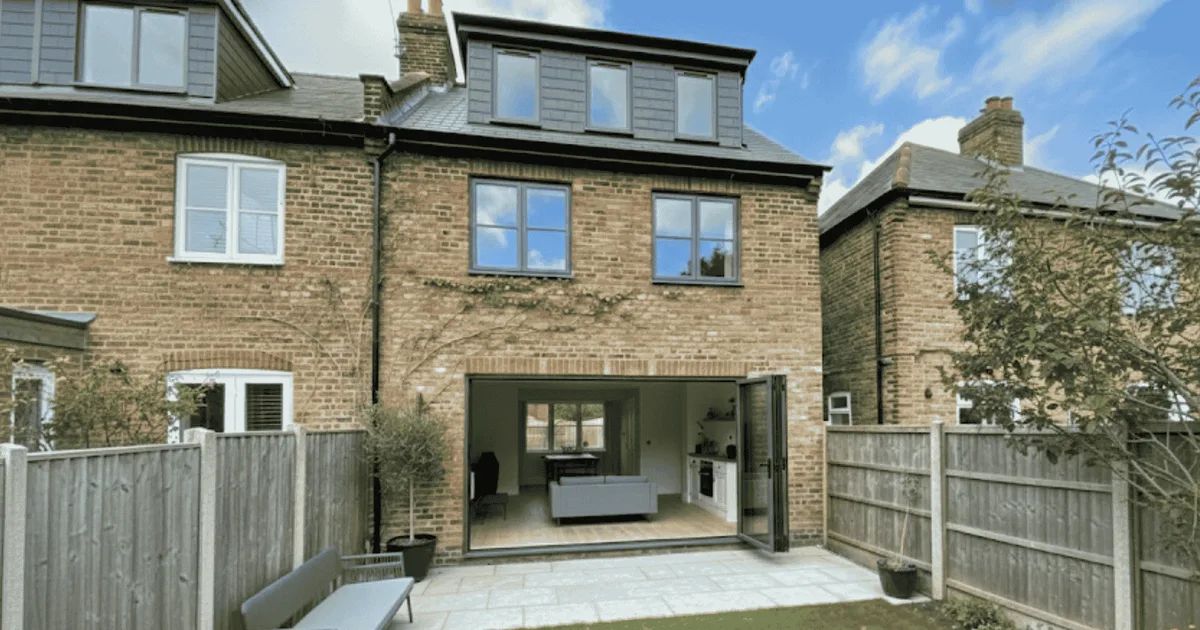
- Dartford is in Kent, so loft applications go to Dartford Borough Council; national permitted development limits of 40m³ (terrace) and 50m³ (semi or detached) still apply (gov.uk).
- Official planning data lists six Dartford conservation areas, including Dartford Town Centre (1980) and Hook Green (1985).
- The Green Belt covers land south of the A2, but it does not remove householder permitted development rights.
- Fees are £548 for an application and £274 for a certificate (Planning Portal, checked November 2026); councils aim to decide in eight weeks.
- Dartford lofts typically cost £28,000-£65,000 (Buildaway's typical project range, checked November 2026).
Usually not. Most Dartford houses, including those in Green Belt villages, can add a loft under permitted development within 40m³ or 50m³ and with no front dormer. Homes in conservation areas such as Dartford Town Centre, listed buildings, flats and larger designs need a £548 application and face an eight-week decision target.
Dartford is in Kent, not London, and its loft applications go to Dartford Borough Council rather than a London borough. The national loft rules are the same, but the local picture is different: Green Belt villages to the south of the A2, historic cores in the town and in Greenhithe, and fast-growing new estates.
This guide explains loft conversion planning in Dartford step by step: which homes need an application, what the fees are, how long decisions take and what is changing in 2027. National rules come via gov.uk and Planning Portal guidance, while each local designation is from official planning records, checked November 2026.
Do you need planning permission for a loft conversion in Dartford?
Most Dartford houses do not need it. A loft that stays within the permitted development limits can go ahead without an application, and that includes houses in Green Belt villages. Conservation areas, listed buildings, flats and designs beyond the limits need an application, which costs £548.
| Route | Where it fits in Dartford | Fee | Usual decision period | Source |
|---|---|---|---|---|
| Permitted development | Houses in the town, Stone, Greenhithe estates and Green Belt villages, outside conservation areas and within the limits | No charge | None required | gov.uk householder guidance |
| Lawful Development Certificate | Written confirmation from Dartford Borough Council that your planned loft is PD | £274 | Usually 8 weeks | Planning Portal fee schedule |
| Full householder planning | Conservation areas such as Dartford Town Centre and Hook Green, mansards, front dormers, flats | £548 | 8-week statutory target | Planning Portal fees and gov.uk targets |
| Listed building consent | Any listed house, including older properties in the historic village cores | None | 8-week target | Historic England and Planning Portal |
| Fee and timing sources checked November 2026. A building regulations application or notice is also needed, whichever planning route applies. | ||||
Unlike most London boroughs, Dartford has a large area of Green Belt. Many owners assume this blocks a loft, but it does not remove householder permitted development rights. It matters mainly when a loft goes beyond the limits and needs a full application.
When does a Dartford loft not need planning permission?
A Dartford house keeps its permitted development rights unless it is listed, sits under an Article 4 direction or lies within a conservation area. The loft must then stay inside the national conditions on size, position and appearance. These are set out in the government's technical guidance.
- A cap of 40m³ of new roof volume on terraced houses and 50m³ on semi-detached or detached homes.
- Nothing added to the main roof slope where it faces a road.
- No part higher than the existing ridge.
- External materials closely matching the existing roof and walls.
- Dormers sitting 20cm or more in from the eaves.
- Side windows in obscure glass, fixed shut below 1.7m above floor level.
- Not available for flats or maisonettes.
The gov.uk permitted development guidance for houses applies in Dartford exactly as it does in London. Remember that older roof additions use up some of the allowance. A Dartford semi with an existing dormer may already be close to the 50m³ figure.
When does a Dartford loft need planning permission?
You will need to apply for a listed house, one under an Article 4 direction or one inside a conservation area, if it is a flat or maisonette, or if the design exceeds the limits. Mansards and front dormers almost always need one in Dartford.
Dartford's conservation areas
The government's planning data records for Dartford list six conservation areas. They include Dartford Town Centre, designated in 1980, and Hook Green, designated in 1985. Others cover historic parts of Greenhithe, Wilmington and Southfleet. Roof extensions in any of them are outside permitted development.
Dartford Town Centre has many older buildings with steep, visible roofs, and planners there will look closely at dormers seen from public streets. In the village conservation areas, materials such as Kent peg tiles or slate often set the tone for what is acceptable.
The Green Belt south of the A2
The Dartford Plan defines the borough's urban area as the land north of the A2 that sits outside the Green Belt. South of the road, villages such as Wilmington, Sutton-at-Hone and Darenth sit in Green Belt countryside, with Hawley close by.
Householder permitted development still applies on Green Belt land, because national rules do not treat it as protected for this purpose. A loft within the limits can still go ahead there. A loft that needs an application, though, will be judged on whether it is a disproportionate addition to the original house.
How to check if your Dartford loft needs planning
Run through these checks with the council's maps and your deeds to hand. Together they tell you whether to build under permitted development, apply for a certificate or submit a full application. We are happy to do them for you as part of a free feasibility visit.
- Confirm the property is a house: flats and maisonettes cannot use permitted development.
- Check whether your address falls inside one of Dartford's six conservation areas.
- Ask Dartford Borough Council whether any Article 4 direction covers your road.
- Look the house up on Historic England's list to see whether it is listed.
- On newer estates, check the original planning permission for conditions that removed permitted development rights.
- Measure the proposed roof volume against the 40m³ or 50m³ limit, counting earlier additions.
- Choose the route: a £274 certificate for a permitted development loft, or a £548 householder application.
Step five matters more in Dartford than in older London suburbs. Large estates around the borough have been built in recent decades, and some planning permissions for new homes include conditions removing permitted development rights. The planning history for your address will show this.
How does approval time compare with build time in Dartford?
Approval and notice periods can be as long as the build itself. A certificate or planning decision takes about eight weeks, a party structure notice two months, and the build six to twelve weeks depending on type. The chart compares them.
The lesson is to run the paperwork in parallel. Serve party wall notices while the certificate or application is being decided, and order steel once the structural drawings are fixed. Done that way, approvals add about two months, not four.
Which loft types suit Dartford homes?
Rear dormers suit Dartford's Victorian terraces and many of its semis. Hip-to-gable conversions suit interwar semis with hipped roofs. Rooflight lofts suit steeper roofs and protected areas. Mansards usually need a full application, especially in conservation areas.
Rooflight (Velux) loft
A rooflight loft leaves the roof shape alone and adds windows in the slope. It is the quickest Dartford option, often finished in six to seven weeks, and the least likely to raise planning issues.
Rear dormer loft
Built out from the back slope, this dormer gives standing height across the rear of the house. In Dartford it usually fits within permitted development. Expect ten to twelve weeks on site for a full-width dormer with a shower room.
Hip-to-gable loft
Interwar Dartford semis often have a hipped end that limits head height over the stairs. Building it up into a gable wall solves that. Paired with a rear dormer, it normally stays within the 50m³ allowance.
Mansard loft
A mansard changes the whole profile of the rear roof. It needs a householder application, and in the Green Belt villages the council will also weigh how much it adds to the original house.
How much does a loft conversion cost in Dartford?
A Dartford loft generally costs £28,000 to £65,000, depending on type, roof structure and finish (Buildaway's typical project range, checked November 2026). That is lower than most London boroughs. Our Dartford loft pricing guide breaks the range down by loft type.
Approval fees follow the national Planning Portal fee schedule: £274 for a certificate and £548 for an application. Build times on our Dartford loft conversion page run from six to seven weeks for a rooflight loft up to ten to twelve for dormer or hip-to-gable work.
What building regulations apply to a Dartford loft?
Building regulations apply to every Dartford loft, whether or not planning permission is needed. Approval can come from local authority building control or a registered approved inspector. The main checks are structure, fire safety, stairs and energy, and a completion certificate confirms the work.
- Part A: structural calculations for joists, beams and any new gable.
- Part B: a protected escape route, fire doors and mains-powered linked alarms.
- Part K: a safe staircase with adequate headroom and handrails.
- Part L: insulation and efficient windows throughout the loft.
Party wall notices in Dartford
The Party Wall etc. Act 1996 covers Kent just as it covers London. On a Dartford terrace you may need notices for both neighbours. Each has 14 days to respond, and a dispute leads to a surveyor's award before the shared wall is touched.
What changes for loft conversions in Dartford in 2027?
For 2027, gov.uk has confirmed nothing new on loft volume or dormer limits. The change it does confirm is to building regulations, where the energy and ventilation parts (L and F) are revised from 24 March 2027. Each fee quoted reflects today's schedule, checked November 2026, rather than any 2027 projection.
The government's 2026 building circular gives a transition: a Dartford loft registered with building control ahead of 24 March 2027 can keep the earlier standards if work starts by 24 March 2028. The new standards mainly affect new-build homes.
For the wider rules on extending a house, see our UK extension planning guide. To check whether a roof has enough height, read whether a Dartford loft can be converted. Our loft design and build service handles the approvals.
Dartford loft planning glossary
- Green Belt
- Protected open land around towns. In Dartford it covers the area south of the A2.
- Disproportionate addition
- The Green Belt test for whether an extension is too large compared with the original house.
- Planning condition
- A rule attached to a planning permission. Some Dartford estates have conditions removing PD rights.
- Householder application
- A planning application for work to a single house, costing £548.
- Approved inspector
- A private building control body registered to check and sign off work.
Dartford loft planning FAQs
Does the Green Belt stop a loft in Wilmington or Sutton-at-Hone?
No. Green Belt status does not remove householder permitted development rights, so a loft within the limits can go ahead without an application. If your design needs permission, Dartford Borough Council will consider whether it is a disproportionate addition to the original house. Conservation area status is a separate check.
Are Dartford's loft rules different from London's?
The national permitted development rules, fees and decision targets are the same. The differences are local: Dartford Borough Council decides applications, the borough has Green Belt villages, and its conservation areas include Dartford Town Centre and Hook Green. Newer estates may also have conditions removing PD rights.
Do I need permission for a loft in Dartford Town Centre?
If your home is inside the Dartford Town Centre conservation area, designated in 1980, yes. Roof extensions there are not permitted development, so you need a householder application costing £548. Rear rooflights are often the simplest change to agree, while dormers seen from the street need careful design.
Can a new-build Dartford home use permitted development?
Often, but check first. Some planning permissions for new estates include conditions that remove permitted development rights. If yours does, a loft needs a householder application even outside a conservation area. The planning history for your address, or a call to the council, will confirm it.
Will Dartford loft planning change in 2027?
For 2027, gov.uk lists no new limits on loft volumes or dormers. Building regulations do move on: revised Parts L and F start on 24 March 2027. Dartford lofts notified to building control before that date can keep earlier standards provided work is under way by 24 March 2028 at the latest.
Bringing it all together
Most Dartford houses, including those in Green Belt villages, can add a loft under permitted development. Conservation areas, listed buildings, flats and larger designs need a £548 application with an eight-week target. A £274 certificate gives proof on any PD loft.
We are FMB registered, we give fixed written quotes, and our lofts carry an 18-month workmanship warranty. Call 0208 108 0388 or email info@buildaway.co.uk to book a Dartford survey. We confirm the route before any design work begins.
By Cormac Hegarty, Director & Founder - Buildaway. Cormac Hegarty is the Founder of Buildaway and a residential construction specialist with a deep portfolio of projects across London.