
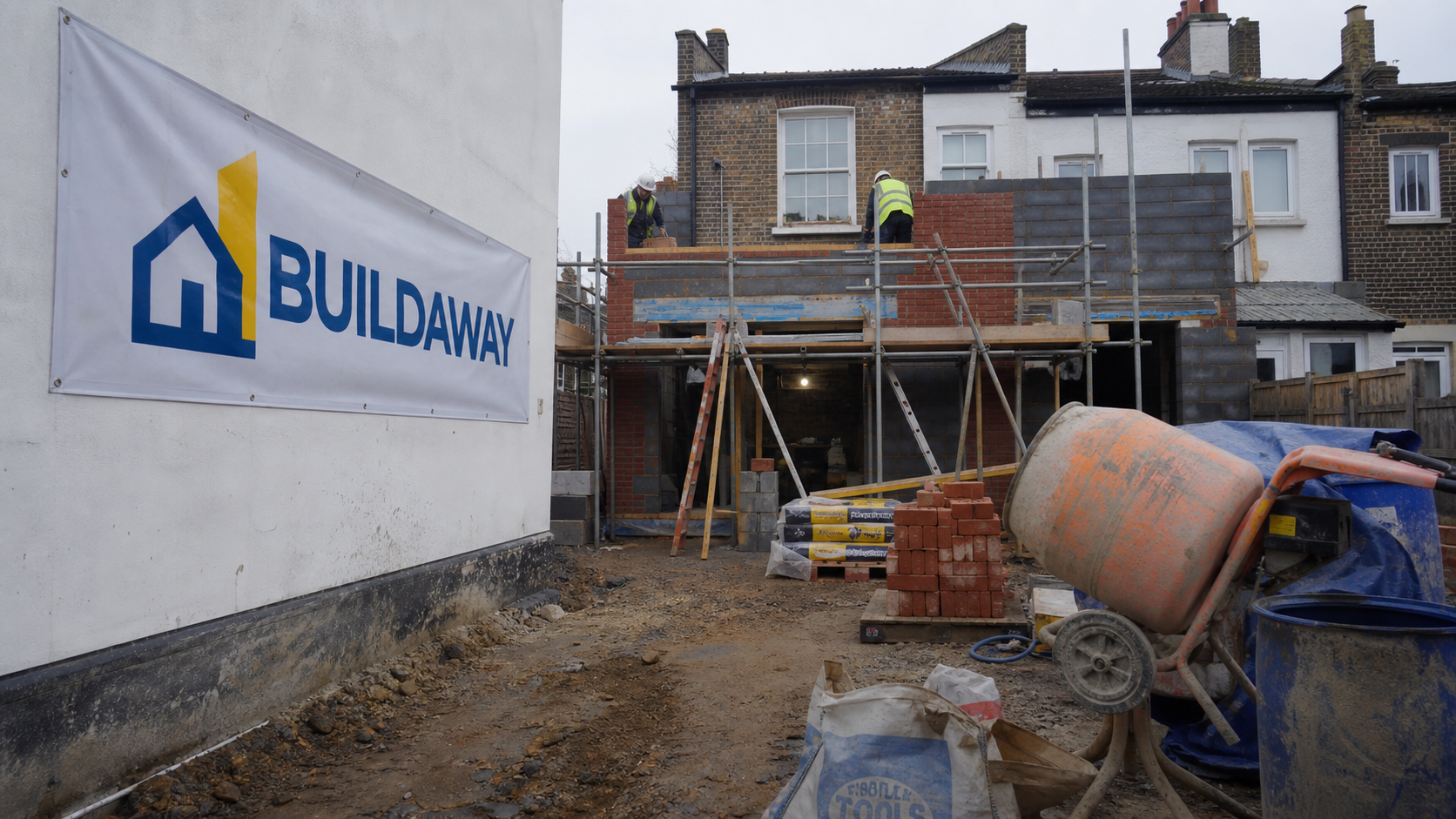
Sidcup is a deceptively complex place to extend a home. From the outside it looks like straightforward suburban territory generous plots, 1930s semis, and wide residential streets. But the London Borough of Bexley has 23 conservation areas, four registered historic parks and gardens, and over 150 listed buildings. Two of those parks Lamorbey Park and Foots Cray Place, both Grade II on the Historic England register sit squarely within the Sidcup area, and their heritage settings reach considerably further than most homeowners realise when they start browsing architects online.
The homeowners adding rear extensions to the chalet-style 1930s semis off Longlands Road in DA15, or opening up the ground floors of Victorian villas near Foots Cray Meadows in DA14, face a specific set of local planning variables that no generic UK timeline addresses. Bexley Council has its own Local Plan policies, its own approach to heritage setting assessment, and conservation area Article 4 Directions that quietly remove the permitted development rights that many DA14 and DA15 homeowners assume they have.
This guide breaks the full extension timeline down phase by phase from first design consultation to final Building Control sign-off with the Sidcup-specific figures you need to plan properly. No filler, no vague estimates.
TL;DR: A standard single-storey rear extension in Sidcup takes 6–10 months from first consultation to completion around 4–6 weeks of design, up to 8 weeks for Bexley Council's planning decision, plus 12–16 weeks of construction. Double-storey builds and projects within or adjacent to Bexley's 23 conservation areas typically run 3–4 months longer. The biggest time-saver in Sidcup? Establishing your heritage and conservation status before your architect produces a single drawing.
Key Takeaways
- Single-storey rear extensions in Sidcup: 6–10 months total from consultation to handover
- Bexley Council targets an 8-week decision from validation for householder planning applications (bexley.gov.uk)
- The London Borough of Bexley has 23 conservation areas and four registered historic parks Lamorbey Park and Foots Cray Place (both Grade II) fall within the Sidcup area
- Party wall obligations on Sidcup's inter-war semis are a common source of pre-construction delay disputed notices can add 2–3 months
- Starting design in autumn puts you on track to break ground in spring the best construction window in South East London
What's the Full Timeline for a Home Extension in Sidcup?
For most Sidcup properties the 1930s chalet-style semis across DA15, the larger Victorian and Edwardian detached houses nearer Foots Cray and the North Cray Road corridor, and the inter-war terraces closer to Sidcup Station in DA14 a standard single-storey rear extension runs between 6 and 10 months from first consultation to handover. A double-storey build extends that to nine or fourteen months depending on design complexity and planning route.
The construction phase is only the visible part of the process. Planning applications, structural engineering, party wall matters, and building regulations approval all sit in the timeline before a single sod gets turned. Most Sidcup homeowners underestimate the pre-build period by roughly two months and in a borough where heritage park settings and conservation area boundaries are more extensive than they appear on a street map, that underestimate can be wider still.
Here's how those months divide across the seven main phases:
For reference: A standard single-storey rear extension in Sidcup, including all pre-build phases, typically takes 6–10 months from first consultation to final sign-off. The build phase alone runs 12–16 weeks. Properties within Bexley's conservation areas or near the heritage settings of Lamorbey Park and Foots Cray Place should add at least 4–6 weeks to the planning stage. (Sources: Bexley Council, Checkatrade)
Before committing to a timeline, it helps to understand the full cost picture too. See our guide on how much does a home extension cost in Sidcup? → Full cost guide for a breakdown of what to expect at each build stage.
Phase 1 Design, Feasibility & Planning Prep (3–6 Weeks)
The period between your first conversation with an architect and the day you submit a planning application sets the tone for everything that follows. Rush it and you'll almost certainly pay for it later usually in the form of a validation rejection from Bexley Council, a request for additional heritage documentation, or a design rethink after a planning officer flags an objection that could have been caught weeks earlier.
What actually happens in this phase
Your architect carries out a measured survey of the property, develops concept drawings, and produces the planning drawings that Bexley Council requires to assess your application. A clean rear extension on a standard DA14 semi in a non-designated area might get through this in three to four weeks. A project that requires a heritage setting assessment because the property sits within the context of Lamorbey Park or the Foots Cray Place estate or one that needs a Design and Access Statement for a conservation area submission, will push to five or six weeks minimum.
Bexley Council offers a pre-application advice service. It isn't free and it takes time, but for any Sidcup project where the heritage context is unclear, it's the most efficient way to identify officer concerns before you've committed to detailed drawings. A planning officer's steer at pre-application stage is worth considerably more than finding out the same information after submission.
The Sidcup planning context you need to know
⚠ Sidcup-Specific Planning Alert: The London Borough of Bexley administers 23 conservation areas and protects four registered historic parks and gardens two of which fall directly within the Sidcup area. Lamorbey Park (DA15, Grade II) and Foots Cray Place (DA14, Grade II) are both on the Historic England register, and their heritage settings extend into the surrounding residential streets. Extensions on properties within or adjacent to these settings can require a heritage impact assessment even when the property itself isn't listed. Separately, the Longlands Road conservation area in DA15 developed in the 1920s and characterised by Arts and Crafts-influenced semi-detached housing and the Foots Cray village conservation area in DA14 both carry Article 4 Directions that remove certain permitted development rights. The Lamorbey and Halfway Street conservation area adds another layer of scrutiny for properties in that part of DA15.
Beyond those designations, Bexley Council places significant weight on neighbour amenity in its extension assessments. The borough applies clear daylight and sunlight tests including the 45-degree and 25-degree rules to evaluate the impact of extensions on adjacent properties. Even a modest rear extension may require a detailed amenity analysis if the neighbouring properties sit at an angle or have windows in close proximity to the proposed build.
The householder planning application fee for a standard extension in Bexley is £258 as of 2025 (GOV.UK Planning Portal). Your architect's time for drawings and documentation is separate and additional.
Unsure whether your project needs full planning permission or qualifies for the permitted development route? Our guide on planning permission for a home extension in Sidcup → Full planning guide walks through the key thresholds for DA14 and DA15 properties.
Not sure whether your Sidcup extension needs
full planning permission or qualifies for Prior Approval?
Buildaway's
team can check your address and give you a clear answer before you commit to anything.
Phase 2 Bexley Council Planning Permission (8–13 Weeks)
Once your application lands with Bexley Council, the clock starts on validation a separate step that takes one to two weeks from submission. Only once the council confirms all required documents are present and correct does the formal eight-week decision target begin. That means your practical window from submission to decision is ten to twelve weeks in most cases.
Conservation area applications and those involving heritage park settings in DA14 and DA15 regularly push to thirteen weeks. In practice, straightforward Sidcup rear extensions without heritage complications have been decided in as little as seven weeks so the range is real. The determining factor is almost always how complete and well-prepared the submission is from day one.
How the Bexley planning process actually works
- Validation (1–2 weeks): Bexley checks all documents are present and correct before registering the application.
- Neighbour consultation (21 days): Statutory requirement. Adjacent owners are formally notified and can submit representations.
- Officer assessment: Review against Bexley's Local Plan, heritage designations, and specific amenity tests for DA14 and DA15.
- Decision (target 8 weeks from validation): Most Sidcup applications are decided under delegated officer authority, making outcomes predictable when submissions are well-prepared.
Bexley Council targets 8 weeks from validation to decision for standard householder applications. Applications near Lamorbey Park or Foots Cray Place, or within Bexley's 23 conservation areas, should allow 10–13 weeks. (Source: London Borough of Bexley planning guidance)
The permitted development shortcut
Rear extensions within permitted development limits 3 metres deep for attached houses, 4 metres deep for detached require only Prior Approval rather than a full planning application. Prior Approval must be decided within 42 days under the Town and Country Planning Order. On a clean project without heritage complications, that saves you six weeks or more.
But the permitted development shortcut has clear limits in parts of Sidcup. Within Bexley's conservation areas Longlands Road, Foots Cray, and Lamorbey/Halfway Street Article 4 Directions restrict certain types of external alteration. If your property falls within any of these designations, verifying your status on Bexley Council's planning portal before briefing an architect is not optional. Always verify your specific address on Bexley Council's planning portal before committing to a design route.
Phase 3 Building Regulations, Party Walls & Pre-Construction (4–8 Weeks)
A planning approval doesn't mean you can start on site. Two further processes sit between your decision notice and the first day of groundworks and both can extend your programme significantly if they're not set in motion promptly.
Building Regulations approval deals with structural safety: foundations, steelwork, insulation, and drainage. Your builder or structural engineer submits drawings to Bexley Building Control or a private inspector. Approval typically takes four to eight weeks. Projects in Sidcup involving deeper excavations particularly on the clay-heavy ground that runs through DA14 and DA15 often require more detailed foundation specifications.
The Party Wall Act is where many Sidcup homeowners encounter delays. If your extension is within 3 metres of a neighbouring foundation as it routinely is on the 1930s semis along Longlands Road, Hurst Road, and Christchurch Road you must serve a notice at least two months before construction starts.
From Cormac Hegarty, Director & Founder: "Sidcup's 1930s semi-detached stock is among the most party-wall-intensive we work on across South East London. The plots are generous, but the gap between properties is often narrow enough that a rear extension almost always triggers obligations. On a recent project off Longlands Road, both neighbours were affected we'd served both notices before the planning application was even submitted. That sequencing saved the client a two-month delay."
When a neighbour consents, you're on schedule. When a neighbour appoints their own surveyor their legal right add another four to eight weeks and surveyor costs on both sides.
Phase 4 Construction: What Gets Built and When (12–24 Weeks)
The construction phase runs from groundworks through to snagging and sign-off. Depending on scale, it takes between 12 and 24 weeks on site.
- Groundworks & foundations (Weeks 1–3): Excavation and drainage. Sidcup sits on London clay DA14 ground around Foots Cray Meadows can waterlog after rain. Groundworks between November and March carry a weather risk that can add 1–2 weeks.
- Structure (Weeks 4–7): Walls and steelwork. This is when the extension takes shape.
- Weathertight (Weeks 8–10): Roof, windows, and doors. Once sealed, internal trades can continue regardless of rain.
- First fix (Weeks 11–13): Electrical and plumbing before plastering.
- Plaster & second fix (Weeks 14–15): Walls take shape; sockets, switches, and kitchen units installed.
- Decoration & sign-off (Weeks 15–16): Final paint, tiling, and Building Control inspection.
For a standard single-storey rear extension in Sidcup, the on-site phase typically runs 12–16 weeks. Double-storey builds extend this to 18–24 weeks. (Source: Checkatrade; Buildaway project experience)
Wondering whether to go single or double storey? The cost and timeline implications are quite different. See our comparison of single storey vs double storey extension for the full breakdown.
What Actually Delays a Sidcup Home Extension?
Four causes account for most overruns on Sidcup builds specifically:
Heritage park settings. Lamorbey Park (DA15) and Foots Cray Place (DA14) are Grade II entries on the Historic England register. Streets bordering Lamorbey Park including Burnt Oak Lane and Hurst Road frequently trigger heritage setting assessments that standard applications don't account for. Missing this requirement at submission adds weeks to validation.
Conservation area and Article 4 surprises. Bexley's conservation areas in Sidcup Longlands Road, Foots Cray, and Lamorbey/Halfway Street carry Article 4 Directions that restrict permitted development. The Longlands Road conservation area protects Arts and Crafts-influenced housing from the 1920s. Catching this at first consultation saves weeks of rework.
From our Sidcup projects: In the majority of extension enquiries we handle across DA14 and DA15, the homeowner has already assumed permitted development applies to their property only to discover during our initial review that either a conservation area designation, a heritage park setting, or an Article 4 Direction changes that assumption. This misunderstanding alone typically adds two to four weeks to the pre-application phase for clients who came to us with an architect already briefed on the wrong route.
Party wall disputes on Sidcup's semis. Residential grids between Sidcup Station and Foots Cray are dominated by semi-detached properties where extensions routinely trigger Party Wall Act obligations. Disputed notices add 2–3 months and professional surveyor costs on both sides.
Late specification changes. Changing roof lights, window dimensions, or kitchen layouts after the build has started stops dependent trades in their tracks while new materials are ordered. Every decision you finalise before groundworks start is a decision that can't cause a delay on site.
Four issues drive overruns in Sidcup: heritage assessments near Lamorbey Park, Article 4 Directions removing PD rights, party wall disputes on semi-detached stock, and late specification changes. (Source: London Borough of Bexley; Historic England)
One point of contact. One clear
process.
Buildaway manages planning, party wall, structural engineering,
and the full build across Sidcup.
When Is the Best Time to Start a Sidcup Home Extension?
Start your design process in September or October, submit planning in November, receive a decision in January, and begin groundworks in March or April.
Spring groundworks make sense for Sidcup's soil. London clay in DA14/DA15 drains poorly after winter rain; groundworks in December or January carry a risk of waterlogging. By March, conditions improve, days are longer, and you'll be weathertight before autumn arrives. Reliable builders in South East London book up months in advance; starting in autumn secures your slot for the spring rush.
Putting It All Together
A Sidcup home extension involves more pre-build groundwork than most anticipate, but it's manageable when heritage and party wall obligations are identified at the start.
- Single-storey rear extension: 6–10 months total
- Double-storey extension: 9–14 months
- Conservation area: Add 4–6 weeks to prep; allow 10–13 weeks for a decision
- Party wall: Serve notice early; disputes add 2–3 months
- Best start time: Design in autumn, break ground in spring
At Buildaway, every Sidcup project runs with a single point of contact coordinating your architect, engineer, and on-site team from consultation to sign-off.
For the next step, see our full breakdown of home extension costs in Sidcup for a realistic budget across all project types.