
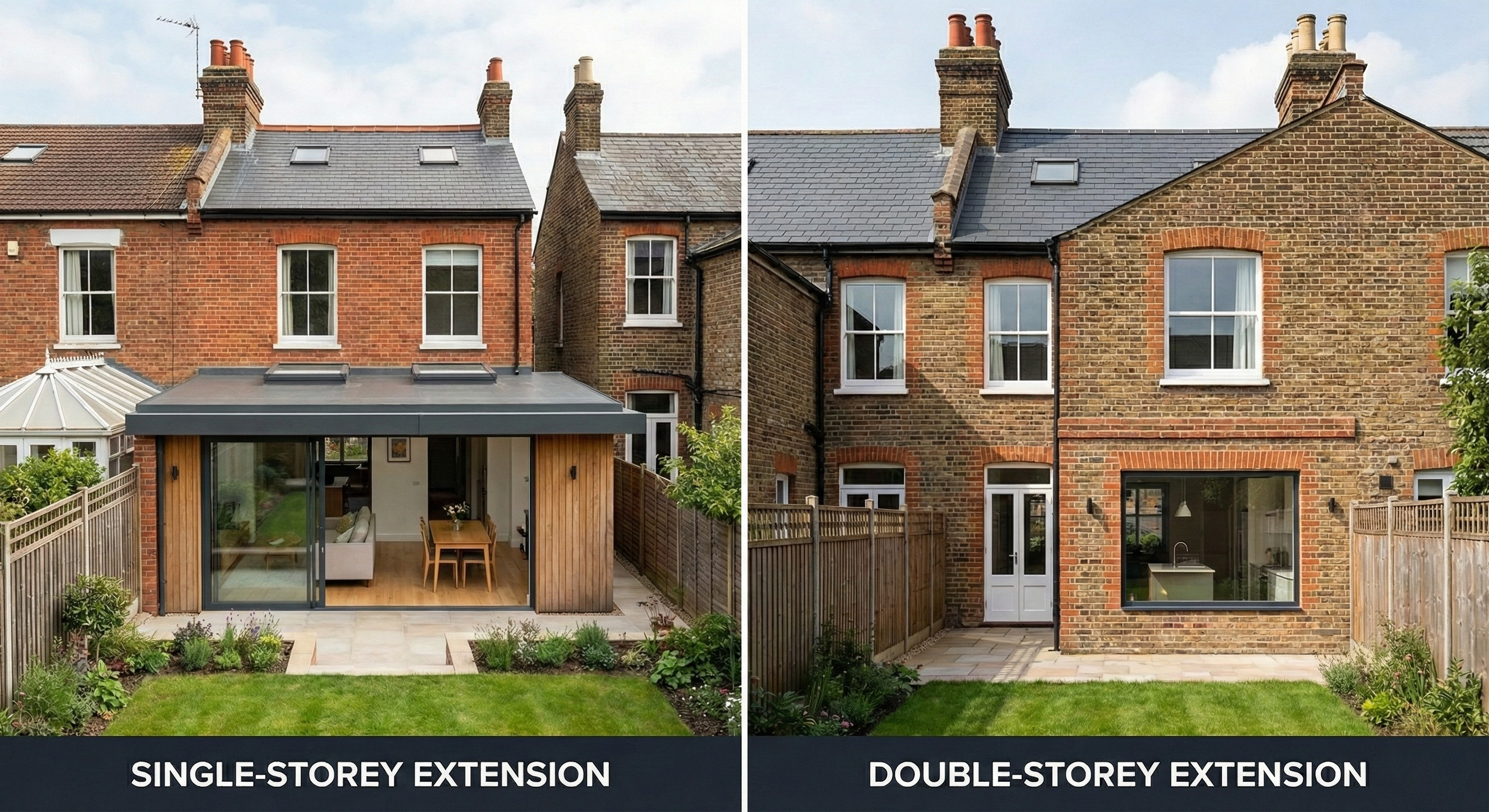
1. Introduction: A Common Sidcup Homeowner Decision
For homeowners in Sidcup (DA14, DA15), extending a property is often more practical than relocating. The area’s housing stock — from 1930s semis near Sidcup Place, to family streets around Queen Mary's Hospital Sidcup, and homes close to Foots Cray Meadows — frequently offers good scope for additional space.
One question comes up repeatedly:
Should I choose a single-storey extension or a double-storey extension?
This decision affects build cost, how disruptive works will be, how the home functions afterwards, and the level of value added. This guide is written for Sidcup homeowners who want a clear comparison based on realistic figures, local planning context, and long-term outcomes rather than promotional language.
2. What Is a Single-Storey Extension?
A single-storey extension adds new space at ground-floor level only. In Sidcup, rear extensions are particularly common, especially on semi-detached houses with established gardens.
Common Sidcup Use Cases
- Larger kitchen and dining layouts
- Kitchen extensions with rooflights or wide glazing
- Utility rooms or informal family rooms
Why Homeowners Choose This Option
- Lower upfront cost
- Shorter construction period
- Often achievable under permitted development
- No changes to upstairs rooms
When It Works Well
- Existing bedrooms already meet household needs
- Garden depth allows expansion without feeling cramped
- The focus is day-to-day comfort rather than resale planning
When It Does Not
- Extra bedrooms or bathrooms are required
- Garden space is already tight
- The property sits below the local value ceiling
3. What Is a Double-Storey Extension?
A double-storey extension adds floor area across both ground and first floors, usually to the rear or side.
Typical Layouts in Sidcup
- Kitchen or family space below with bedrooms above
- Ground-floor living area with an upstairs bathroom or ensuite
- Rear-and-side extensions on wider plots
Why Homeowners Consider It
- Adds bedrooms and bathrooms as well as living space
- Better efficiency per square metre
- Stronger appeal to long-term family buyers
When It Makes Sense
- Growing families
- Homes with limited garden length
- Properties with clear scope to rise in local value
4. Cost Comparison in 2026: Sidcup Context
Single-Storey Extension Costs
- Typical range: £2,300–£3,400 per m² in London and the South East
- 20m² extension: £50,000–£70,000
- 30m² extension: £65,000–£100,000+
Double-Storey Extension Costs
- Typical range: £2,200–£3,000 per m²
- 40m² total (20m² per floor): £90,000–£130,000+
- 60m² total: £115,000–£180,000+
Why Double-Storey Can Be Better Value
Foundations, structural elements, and groundworks serve both levels. This often reduces the cost per square metre, even though the total project cost is higher.
5. Space and Practical Use Comparison
Single-Storey Extensions
- Preserve the existing upstairs layout
- Reduce garden size more noticeably
- Excellent for improving everyday living
- Less disturbance to bedrooms during works
Double-Storey Extensions
- Deliver a substantial increase in usable space
- Preserve more garden relative to space gained
- Allow layouts to adapt as needs change
- Longer and more complex construction programme
Short-term disruption is usually greater with double-storey projects, but many Sidcup homeowners consider the long-term benefits worthwhile.
6. ROI and Property Value Impact in Sidcup
Single-Storey ROI
- Typical uplift: 5–10%
- Kitchen-focused layouts can reach up to 15%
- Most effective where ground-floor layouts were previously limited
Double-Storey ROI
- Typical uplift: 10–20%
- Additional bedrooms and bathrooms perform best
- Family homes see the strongest response
In Sidcup, buyers place strong emphasis on bedroom numbers and practical layouts. A well-planned double-storey extension often outperforms a large but poorly integrated single-storey addition.
7. Planning Permission and Regulations in Sidcup
Planning rules vary by street and property type across Sidcup.
Key Points to Understand
- Many single-storey extensions qualify as permitted development
- Some double-storey extensions may also be permitted
- Conservation areas apply in specific pockets
- Article 4 Directions affect certain streets
- Local constraints can differ significantly by plot
Early advice from the local planning authority can confirm feasibility before design costs increase.
8. Common Mistakes Sidcup Homeowners Make
- Choosing the lowest quote without checking scope
- Designing only for current needs
- Poor consideration of daylight through the house
- Underestimating total project costs and VAT
- Overlooking heating and boiler capacity
- Creating layouts that limit future resale appeal
- Exceeding the local property value ceiling
Most of these issues are easier to avoid during planning than to correct later.
9. Which Option Is Right for You?
A single-storey extension may suit you if:
- Budget is under £80,000
- You want better ground-floor living space
- Height restrictions apply
- Bedroom numbers are already sufficient
A double-storey extension may suit you if:
- Extra bedrooms or bathrooms are required
- Long-term value growth matters
- Garden space is limited
- Your home has scope to increase in local value
So, which is better in Sidcup?
There is no single answer. For lifestyle-led improvements, single-storey extensions often work well. For future planning and stronger returns, double-storey extensions usually provide more flexibility.
10. How Buildaway Can Help
Buildaway supports Sidcup homeowners across DA14 and DA15, delivering both single and double-storey extensions.
We offer:
- Planning-led advice based on your specific property
- Clear cost comparisons and value guidance
- Design-focused solutions rather than standard layouts
- Full project management from drawings to completion
- Local experience with Sidcup planning considerations
If you want clear, professional advice without pressure, we are happy to help.
Ready to Discuss Your Sidcup Extension?
📞 020 8108 0388
📧 info@buildaway.co.uk
🌐 www.buildaway.co.uk
Buildaway — helping Sidcup homeowners extend with confidence, clarity, and long-term value.