
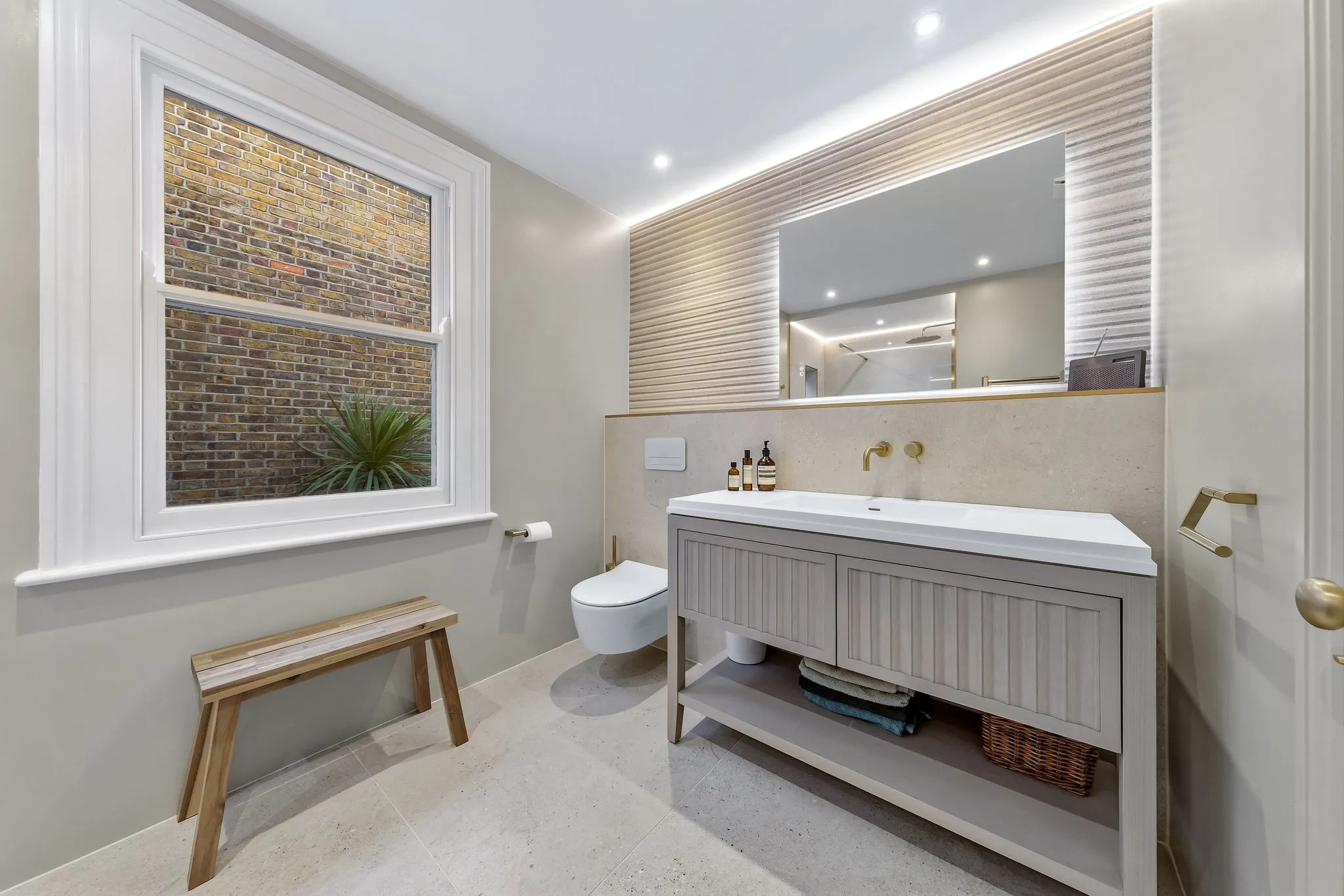
From Wimbledon Village to the streets below the station, a bathroom renovation here is expected to be done properly, and the choice between a wet room and a walk-in shower is part of that. Both can look excellent. The right one suits the house and your plans.
And it carries weight at sale. Bathrooms are among the rooms buyers scrutinise most (Propertymark, 2025), so the format shapes resale, accessibility and the floor's longevity.
This guide is written for Wimbledon, from the Edwardian and Victorian villas near the Common and the Village to the family homes around the Broadway and Rushmere.
- A layout adds nothing fixed on its own; a current, broadly appealing bathroom is what holds value (Propertymark, 2025).
- Main family bathroom: walk-in shower. En-suite, loft or small room: wet room.
- Level-access wet rooms are increasingly prized as 19% of England is now 65 or over (ONS, 2023).
- Tank to British Standard, and keep a bath in the home.
What's the Difference Between a Wet Room and a Walk-In Shower?
Beneath the finish, the distinction is structural. A wet room tanks the whole floor and drains at one point, with no tray and no enclosure; a walk-in shower keeps the water on a low or level tray behind glass. Approved Document G (gov.uk, 2024) and BS 5385 govern the waterproofing on both before tiling.
Wimbledon's homes guide the choice. The larger Village and Common-side villas carry bathrooms roomy enough for a walk-in shower, whereas tight box rooms and the en-suites carved into older homes are exactly where a wet room's uninterrupted floor earns its place.
Wet Room vs Walk-In Shower: At a Glance
| Feature | Wet Room | Walk-In Shower |
|---|---|---|
| Waterproofing | Whole room tanked | Shower zone + splash area |
| Typical cost (Wimbledon) | Higher (£9,000–£17,000) | Lower (£6,500–£11,500) |
| Accessibility | Excellent (step-free) | Good (low tray) |
| Best room | En-suite, small or second bathroom | Main family bathroom |
| Resale appeal | Broad (if not the only bathroom) | Widest buyer appeal |
| Maintenance | Low (if tanked correctly) | Low |
Does a Wet Room or Walk-In Shower Add More Value in Wimbledon?
No layout carries a guaranteed uplift; the consistent finding is that a current, widely appealing bathroom defends value better than any particular format (Propertymark, 2025). With Wimbledon homes frequently near £800,000, quality is taken as read, so the main bathroom rewards a carefully judged walk-in shower.
The wet room earns its place in an en-suite, a second bathroom or a loft. Our Wimbledon cost-versus-value guide sets out the resale numbers.
Which Is Better for Accessibility and Future-Proofing?
On accessibility the wet room is the stronger choice by some way. Its level threshold admits a wheelchair or frame with no lip, which suits anyone planning to remain at home, an ever-larger group as 19% of England passes 65, a share forecast to reach 24% by 2043 (ONS, 2023).
Wimbledon's substantial family homes tend to be held for years, so designing for later life is sensible. Removing the step at the bath or tray clears the bathroom's most common hazard.
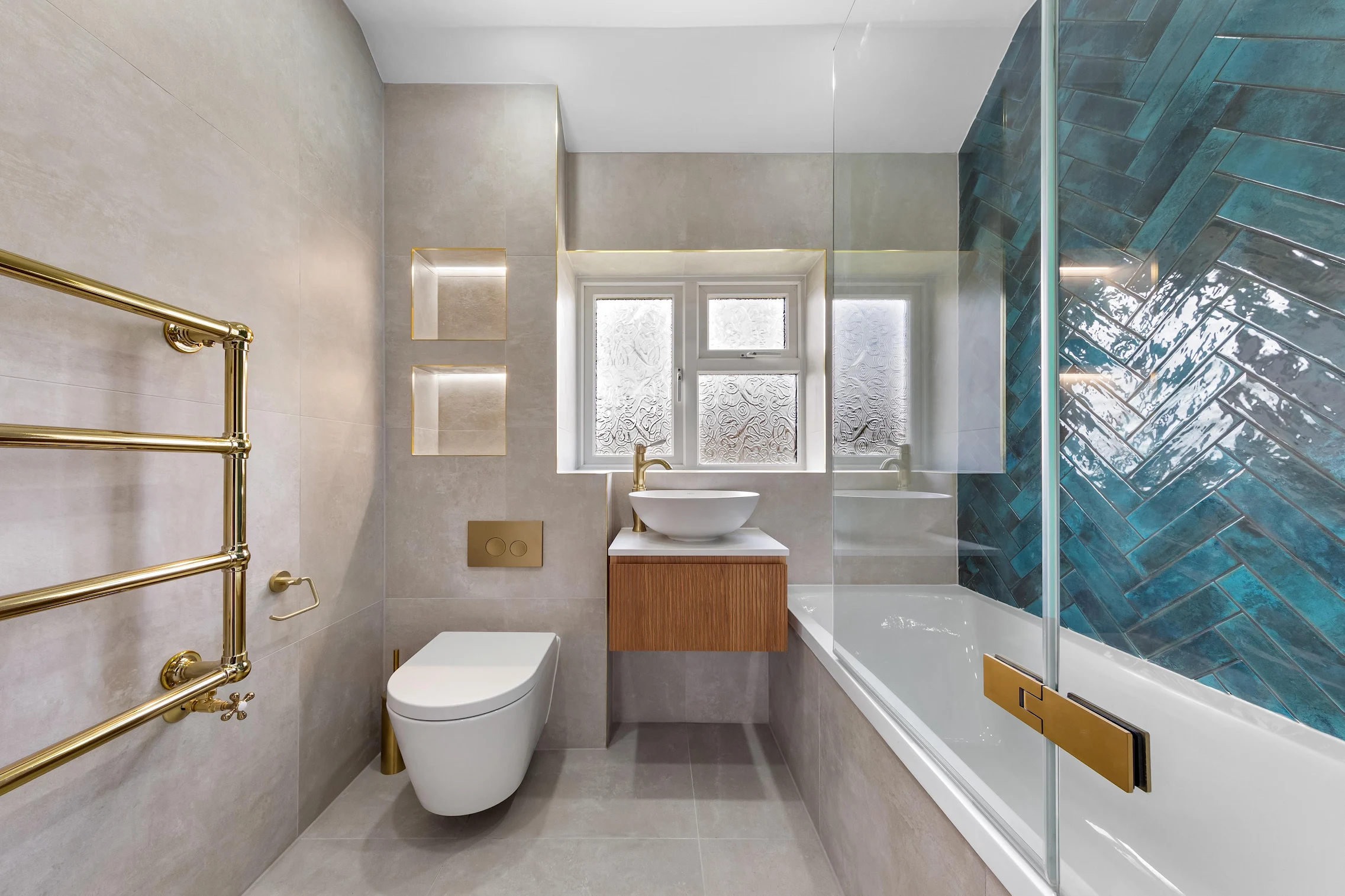
The trend is unmistakable: the over-75 population is forecast to grow close to twofold, nearing 10 million, by 2039 (Centre for Ageing Better, 2025), while roughly a third of over-65s fall each year (NHS). Drawn into the scheme early, a bench, slim rails and a slip-resistant floor simply present as considered detailing.
Do You Need Building Regulations for a Wet Room in Wimbledon?
Both layouts need sign-off. Each meets Approved Document G (2024) and Part P; the wet room also wants BS 5385 tanking before tiling. Wimbledon sits with the London Borough of Merton, whose Building Control works from the Civic Centre, London Road, Morden SM4 5DX.
Internal bathroom work seldom needs planning permission, but the conservation areas around the Village and Common make an early check worthwhile. And Approved Document M can require a level-access shower to be built as a wet room in some homes, a point a good Wimbledon fitter should raise before quoting.
How Much Does a Wet Room Cost vs a Walk-In Shower in Wimbledon?
A wet room generally costs more than the equivalent walk-in shower, reflecting a whole tanked floor against a seated tray, though accessible conversions may qualify for a Disabled Facilities Grant of up to £30,000 in England (gov.uk, 2025).
Recent Buildaway quotes across SW19 and SW20:
- Walk-in shower bathroom: £6,500 – £11,500
- Wet room (standard): £9,000 – £17,000
- Level-access accessible wet room: from around £7,000
The premium buys the tank, the formed fall, the tiling and any drainage move, often greater in larger period homes. A fixed quote beats a day rate, since rework cancels the saving. Our cost calculator gives a ballpark; the Wimbledon fitting cost guide the detail.
Are Wet Rooms High-Maintenance or Harder to Sell?
A wet room that has been tanked properly is undemanding and stays watertight for many years; the cautionary tales almost always come back to shortcut waterproofing rather than the concept. The one resale reservation is a wet room left as the household's only bathroom, where, with around 6% of older people finding bathing difficult (Age UK) and many buyers still wanting a tub, a single retained bath settles the matter.
From there, upkeep is modest, resealing grout and silicone, drying the screen and ventilating well, and in Wimbledon's older villas a capable extractor keeps a bathroom feeling fresh rather than close.
The Verdict: Which Should You Choose for Your Wimbledon Home?
Plainly put: a walk-in shower for the main family bathroom and the broadest appeal, a wet room for en-suites, lofts, small rooms and accessibility. It is the calibre of the work, not the label, that buyers ultimately reward (Propertymark, 2025).
For Wimbledon homes:
- Village or Common-side villa: walk-in shower in the family bathroom, wet room en-suite above.
- Box room or period en-suite: a wet room's open floor wins.
- Accessible or downstairs bathroom: level-access wet room, future-proofed.
For a fixed price, our bathroom fitters in Wimbledon will survey the space.