
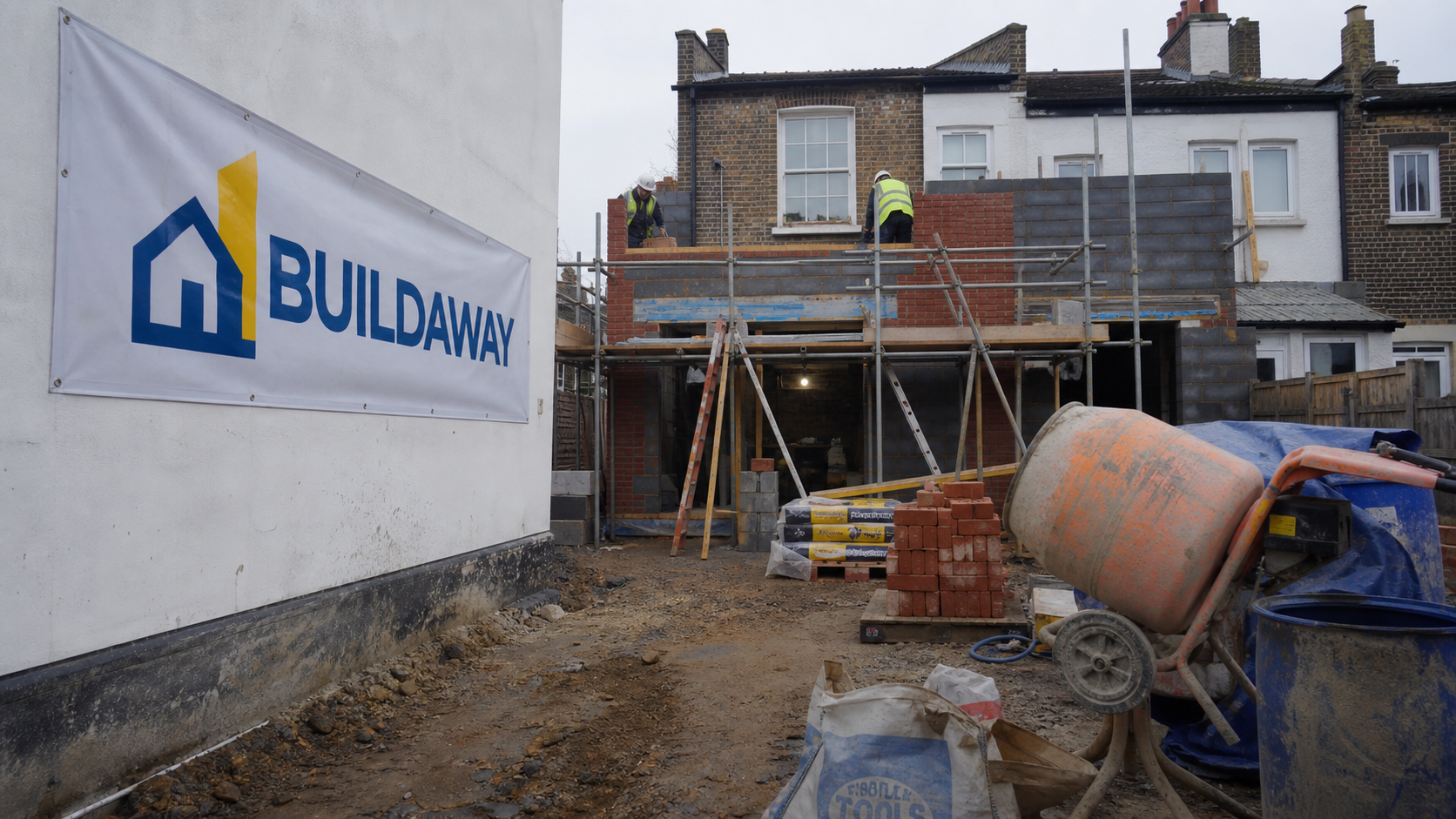
Lewisham is a borough that surprises homeowners more often than it should. It has a reputation as a straightforward inner South East London location dense Victorian terraces, good rail connections, an active planning department with a strong approval rate. All of that is accurate. What catches people out is the conservation area network.
Lewisham has over 20 designated conservation areas spread across SE4, SE6, SE12, SE13, SE14, and SE23. Several carry full Article 4 Directions. And Lewisham's firm requirement for a heritage statement on every planning application affecting a property in or adjacent to a conservation area adds a documentation step that many homeowners and occasionally some architects fail to account for when building their programme.
The families extending the tight Victorian terraces along Torridon Road and Fernbrook Road in SE13, or opening up the ground floors of Edwardian houses near Lee station in SE12, face a specific set of local planning variables that generic UK timelines never address. Lewisham Council runs one of the better-performing planning departments in inner South East London. But performance statistics don't help you if your application arrives incomplete, missing a heritage statement, or designed on the wrong planning route because no one checked the conservation area boundary map first.
This guide breaks the full Lewisham extension timeline down phase by phase from first design meeting to final Building Control sign-off with the real SE-postcode-specific figures you need to plan properly.
TL;DR: A standard single-storey rear extension in Lewisham takes 6–10 months from first consultation to completion around 4–6 weeks of design, up to 8 weeks for Lewisham Council's planning decision, plus 12–16 weeks of construction. Projects within the borough's conservation areas particularly Forest Hill in SE23 and Telegraph Hill in SE14 typically run 3–4 months longer in total. The key time-saver in Lewisham? Checking your conservation area status and understanding the heritage statement requirement before your architect starts drawing.
Key Takeaways
- Single-storey rear extensions in Lewisham: 6–10 months total from consultation to handover
- Lewisham Council targets an 8-week decision from validation for householder planning applications, with 96.7% decided within that window (lewisham.gov.uk)
- London Borough of Lewisham has over 20 conservation areas Forest Hill in SE23 carries a full Article 4 Direction; Telegraph Hill in SE14/SE23, Ladywell in SE13, and Lee Manor in SE12 all impose additional design requirements
- Lewisham requires a heritage statement on every application affecting a property in or adjacent to a conservation area this is non-negotiable at validation stage and catches many homeowners unprepared
- Party wall obligations on the tightly-spaced Victorian terraces of SE13 and the Edwardian semis of SE12 are among the most reliable pre-construction delays start the notice process as early as possible
What's the Full Timeline for a Home Extension in Lewisham?
Lewisham's housing stock is predominantly Victorian and Edwardian, with pockets of inter-war and post-war development filling in the gaps. The terraced streets of Hither Green and Catford in SE13 and SE6 are some of the most densely built in South East London. The larger Edwardian semis and detached houses around Lee and Grove Park in SE12 have more generous plots but are no less likely to fall within a conservation area designation. And the Victorian villas of Forest Hill and Telegraph Hill in SE23 and SE14 sit within two of the most actively enforced conservation areas in the borough.
For most Lewisham homes, a standard single-storey rear extension runs between 6 and 10 months from first consultation to handover. A double-storey build adds three to five months. The construction phase is only part of that picture planning, structural engineering, Building Regulations, and party wall matters all sit in the programme before work begins on site, and most Lewisham homeowners underestimate this pre-build period by at least six to eight weeks.
Here's how those months divide across the seven main phases:
For reference: A standard single-storey rear extension in Lewisham, including all pre-build phases, typically takes 6–10 months from first consultation to final sign-off. The build phase alone runs 12–16 weeks. Properties within any of Lewisham's 20+ conservation areas especially the Forest Hill and Telegraph Hill designations in SE23 and SE14 should add at least 4–6 weeks to the planning stage. (Sources: London Borough of Lewisham, Checkatrade)
Before committing to a timeline, it helps to understand the full cost picture too. See our guide on how much does a home extension cost in Lewisham? → Full cost guide for a breakdown of what to expect at each build stage.
Phase 1 Design, Feasibility & Planning Prep (3–6 Weeks)
This phase determines the pace of everything that follows. The gap between your first conversation with an architect and the day you submit a planning application is nearly always longer than homeowners expect and in Lewisham, the borough's heritage statement requirement means that even applications in conservation areas that might seem visually straightforward require supporting documentation that takes time to prepare properly.
What actually happens in this phase
Your architect carries out a measured survey of the property, develops concept drawings, and produces the planning drawings Lewisham Council needs to assess your application. A clean rear extension in a non-designated part of SE6 or SE12 might clear this stage in three to four weeks. A project in the Forest Hill Conservation Area, or on a street within the Telegraph Hill or Ladywell designations, will run to five or six weeks minimum and that's when everything goes smoothly.
The difference in Lewisham is the heritage statement. Unlike some other South East London boroughs where heritage documentation is required only in the most complex cases, Lewisham Council requires a heritage statement for every planning application affecting a building in or adjacent to a conservation area. That means your architect needs to produce a document demonstrating how the proposed extension responds to and does not harm the character and appearance of the designated area. A heritage statement written without proper knowledge of the specific conservation area's character appraisal will be flagged at validation, adding two to three weeks to the pre-application phase before you've even started the clock.
Lewisham Council offers a pre-application advice service. For any SE23, SE13, or SE14 project where conservation area status is in play, it's worth the investment. An officer's steer before drawings are finalised consistently saves more time than the service takes.
The Lewisham planning context you need to know
⚠ Lewisham-Specific Planning Alert: The London Borough of Lewisham administers over 20 conservation areas across the borough's SE postcodes. Two in particular define the Lewisham planning conversation for homeowners.
The Forest Hill Conservation Area in SE23 45 hectares, the fifth largest in the borough carries a full Article 4 Direction across the entire area. Designated in 1976 and extended twice since, it covers Devonshire Road, Dartmouth Road, Westwood Park, Taymount Rise, Thorpewood Avenue, and a significant swathe of the surrounding Victorian and Edwardian residential streets. The Article 4 Direction means that alterations which would normally fall within permitted development including certain types of extension and changes to windows, doors, and materials require a full planning application. Every application affecting a property within this designation requires the heritage statement that Lewisham mandates borough-wide for conservation area work.
The Telegraph Hill Conservation Area, straddling SE14 and SE23 around Arbuthnot Road, Allenby Road, and the Victorian streets descending from the park, similarly restricts external alterations that would elsewhere qualify as permitted development. The Ladywell Conservation Area in SE13 designated in 2010 and covering the late Victorian terraces built by Samuel Jerrard along Algernon Road, Vicars Hill, Algiers Road, and Embleton Road applies the same framework of enhanced scrutiny and mandatory heritage documentation.
Beyond conservation area designations, the River Ravensbourne and River Quaggy corridors running through SE13 create localised flood risk zones. Extensions in the Hither Green and Lewisham town centre areas particularly on streets close to Ladywell Fields or the Ravensbourne channel may require a Flood Risk Assessment even for single-storey builds. This is a Lewisham-specific planning variable that doesn't appear in most online extension guides but affects a meaningful number of SE13 and SE6 addresses.
The householder planning application fee is £258 as of December 2023 (GOV.UK Planning Portal). The heritage statement and any flood risk assessment required are additional to that fee and your architect's professional charges.
Unsure whether your Lewisham project falls within a conservation area or requires a heritage statement? Our guide on planning permission for a home extension in Lewisham → Full planning guide covers the key thresholds across SE6, SE12, SE13, SE14, and SE23.
Not sure about your Lewisham property's planning position? Buildaway's team can advise before you commit to anything.
Get Your Free No-Obligation Quote →Phase 2 Lewisham Council Planning Permission (8–13 Weeks)
Once your application is submitted, Lewisham Council validates it within one to two weeks checking that all required documents, plans, and supporting statements are present before registering it and starting the formal eight-week clock. From submission to a decision letter, the practical window is ten to twelve weeks for most Lewisham householder applications.
Lewisham consistently performs above the national average on planning speed: around 96.7% of householder applications are decided within the 8-week statutory period. That's a genuine advantage over some neighbouring boroughs. But it only translates into a faster timeline when applications arrive complete and well-prepared. A missing heritage statement, or a scheme that hasn't been assessed against the relevant conservation area character appraisal, will be picked up at validation and the clock won't start until the deficit is addressed.
How the Lewisham planning process works
- Validation (1–2 weeks): Lewisham checks that all required documents are present and correct plans, elevations, site plan, fee, and for conservation area properties, the mandatory heritage statement before registering the application.
- Neighbour consultation (21 days): A statutory requirement. Adjacent owners are formally notified and can submit observations on your proposal.
- Planning officer assessment: The officer reviews the proposal against Lewisham's Local Plan policies, the borough's residential extensions guidance, and where applicable the character appraisal of the relevant conservation area. Flood risk zone status is also assessed at this stage for properties near the Ravensbourne and Quaggy corridors.
- Decision (target 8 weeks from validation): The majority of Lewisham householder applications are decided under delegated officer authority, making outcomes predictable when submissions are thorough and clearly respond to the local planning context.
Lewisham Council targets 8 weeks from validation to decision for standard householder applications, with validation taking 1–2 weeks after submission. Around 96.7% of Lewisham householder applications are decided within this statutory period above the national average. Conservation area applications, particularly in Forest Hill and Telegraph Hill, should allow 10–13 weeks from submission to decision. (Source: London Borough of Lewisham; Rubix Planning performance data)
The permitted development route and where it breaks down in Lewisham
Rear extensions within permitted development limits 3 metres deep for attached houses, 4 metres deep for detached require only Prior Approval rather than a full planning application. Prior Approval must be decided within 42 days under the Town and Country Planning (General Permitted Development) (England) Order (GOV.UK Planning Portal). That's a meaningful time saving for properties where PD applies cleanly.
But in Lewisham, the PD route is restricted wherever an Article 4 Direction is in force and the Forest Hill Conservation Area's Article 4 applies to the entire designated area. In Forest Hill, Telegraph Hill, and the other conservation areas where Lewisham has applied Article 4 restrictions, external alterations that would normally qualify as permitted development require a full application instead. Always verify your property's status on Lewisham Council's planning portal before designing around the PD route.
Phase 3 Building Regulations, Party Walls & Pre-Construction (4–8 Weeks)
A planning approval doesn't mean you can start on site. Building Regulations approval and on the overwhelming majority of Lewisham's Victorian and Edwardian terraced streets party wall matters both need to be resolved before groundworks begin.
Building Regulations approval covers structural and safety compliance: foundations, steelwork, insulation, fire separation, and drainage. Your builder and structural engineer submit drawings to Lewisham Building Control (or an approved inspector), and approval typically takes four to eight weeks. For extensions in flood risk zones near the Ravensbourne or Quaggy corridors, drainage and flood mitigation details may require additional sign-off, adding time to this stage.
The Party Wall Act is a near-certainty on Lewisham's Victorian terrace streets. If your extension is within 3 metres of a neighbouring foundation as it will be on almost every street in Hither Green, Ladywell, and the terraced parts of Forest Hill and New Cross you are legally required to serve a Party Wall Notice at least two months before construction starts.
From Cormac Hegarty, Director & Founder: "Victorian terraces in Lewisham are among the most party-wall-intensive projects we handle across South East London. On Torridon Road in SE13, we routinely serve notices on both neighbours for a rear extension the properties are simply too close together for any rear work not to trigger obligations on both sides. On a recent project in Hither Green, we'd served both party wall notices before the planning application was even submitted. The client was initially surprised they thought party walls were something you dealt with just before you started building. Understanding that the two-month statutory notice period sits inside your overall programme, not after planning, is what separates a build that starts on time from one that's delayed two months before a brick has moved."
When neighbours agree to the works, a Party Wall Award is put in place and construction proceeds without interruption. When a neighbour appoints their own surveyor their absolute legal right add another four to eight weeks to the programme, plus professional surveyor costs on both sides.
According to RICS guidance on the Party Wall Act, disputed party wall notices are among the most common causes of pre-construction delay on London domestic projects. On the back-to-back Victorian terraces of SE13 and SE14, this is a structural feature of the build process not an occasional complication.
Phase 4 Construction: What Gets Built and When (12–24 Weeks)
Once planning is approved, Building Regulations drawings are submitted, and party wall notices are served and agreed, the build begins. The construction phase runs from groundworks through to snagging and Building Control sign-off and depending on the scale and complexity of the project, it takes between 12 and 24 weeks on site.
The build follows a fixed sequence of stages:
- Groundworks & foundations (Weeks 1–3): Excavation, concrete pouring, drainage connections. Lewisham's ground conditions vary considerably across the borough London clay is dominant across SE13 and SE6, but properties close to the Ravensbourne or Quaggy watercourses can encounter made ground and variable bearing conditions that require additional investigation. This stage is also weather-sensitive; a wet January in SE13 can add a week to groundworks on clay-heavy ground.
- Structure goes up (Weeks 4–7): Blockwork, structural steelwork where required, roof structure, and external walls. On Victorian terrace sites where the existing rear wall is being opened up, careful temporary support of the existing structure is a critical step at this stage.
- Weathertight (Weeks 8–10): Roof covering, windows, and external doors installed. Once weathertight, internal trades can proceed regardless of the weather a key milestone on any Lewisham terrace extension.
- First fix (Weeks 11–13): Electrical wiring, plumbing pipework, and central heating runs installed before plastering begins. On Victorian terrace projects, routing services around existing masonry requires more care than on newer builds getting this right avoids expensive remedial work after the walls are closed.
- Plaster, insulation & second fix (Weeks 14–15): Walls and ceilings take shape. Skirtings, sockets, switches, and kitchen or bathroom fittings where the extension includes a new kitchen or utility space.
- Decoration & snagging (Weeks 15–16): Final finishes, tiling, paint, and a Building Control inspection to confirm formal sign-off.
For a standard single-storey rear extension on a Lewisham residential property, the on-site construction phase typically runs 12–16 weeks. A double-storey extension extends this to 18–24 weeks on site. Ground conditions near the Ravensbourne and Quaggy corridors in SE13 and SE6 can require additional investigation at the groundworks stage. (Source: Checkatrade; Buildaway project experience)
Wondering whether to go single or double storey? The cost and timeline implications are quite different. See our comparison of single storey vs double storey extension for the full breakdown.
What Actually Delays a Lewisham Home Extension?
Four causes account for the majority of overruns on Lewisham projects specifically and all four are addressable at the outset when the planning context is understood from the start.
Missing the heritage statement at validation. This is the most distinctively Lewisham delay. Unlike neighbouring boroughs where heritage documentation is triggered only by specific heritage designations or listed building proximity, Lewisham requires a heritage statement on every application affecting a property in or adjacent to a conservation area. With over 20 conservation areas across the borough, this requirement catches a large proportion of Lewisham homeowners. An application submitted without a heritage statement will fail validation. The heritage statement then needs to be prepared and resubmitted, adding two to four weeks before the formal planning clock even starts.
Forest Hill and Telegraph Hill Article 4 surprises. The Forest Hill Conservation Area's Article 4 Direction applies to the entire 45-hectare area in SE23 meaning that alterations on streets including Devonshire Road, Westwood Park, and Taymount Rise that would normally qualify as permitted development require full planning applications. Homeowners who brief an architect on the permitted development route before checking their conservation area and Article 4 status routinely find themselves redesigning for a full application route weeks into the process.
From our Lewisham projects: A consistent pattern across our SE23 and SE13 enquiries is homeowners who arrive with a rough brief and a PD assumption, having been told by a neighbour that their similar extension went through on Prior Approval. What they haven't considered is that Lewisham has applied Article 4 Directions to its conservation areas meaning PD rights that applied on a street five years ago may no longer exist today, or may never have applied to their specific property. The heritage statement requirement is an additional layer on top. We flag both in the first conversation. Catching them there, rather than at validation, saves weeks every time.
Flood risk assessments near watercourses. The River Ravensbourne flows through Lewisham town centre and along the edge of Ladywell Fields in SE13. The River Quaggy, a Ravensbourne tributary, runs through Grove Park and Chinbrook Meadows in SE12. Properties within the Environment Agency's defined flood risk zones along either watercourse may require a Flood Risk Assessment as part of a planning application even for a modest single-storey rear extension. This assessment takes two to three weeks to commission and prepare, and applies to a genuinely significant number of SE13 and SE6 addresses that homeowners never anticipate are in a flood risk zone.
Party wall disputes on Lewisham's Victorian terraces. The back-to-back Victorian terrace streets of Hither Green, Ladywell, and New Cross leave almost no gap between properties. Every rear extension on these streets triggers party wall obligations on at least one side, often two. The majority of neighbours consent readily but a disputed notice adds two to three months to the pre-construction phase and introduces professional surveyor costs that many homeowners haven't budgeted for.
Four issues account for most timeline overruns on Lewisham home extensions: missing heritage statements at validation, Article 4 Direction surprises in Forest Hill and Telegraph Hill, flood risk assessments near the Ravensbourne and Quaggy corridors, and party wall disputes on Victorian terrace streets. Lewisham has over 20 conservation areas and requires heritage statements on all applications in or adjacent to those areas. (Source: London Borough of Lewisham)
One point of contact. One clear process. Buildaway handles planning, heritage statements, flood risk coordination, party wall matters, and the full build across Lewisham.
Get Your Free No-Obligation Quote →When Is the Best Time to Start a Lewisham Home Extension?
The answer across South East London is consistent: start your design and planning in September or October, submit your planning application in November, receive a decision in January or February, and begin groundworks in March or April.
In Lewisham, spring groundworks are particularly important for the clay-heavy ground that runs through SE13. London clay retains water through winter and can become difficult to work in sustained wet weather groundworks starting in December or January carry a real waterlogging risk that March starts largely avoid. Properties near the Ravensbourne or Quaggy have an additional reason to start in drier conditions: ground saturation near these watercourses extends further from the channel than most homeowners expect.
There's also the straightforward availability argument. Reliable builders in inner South East London book up quickly particularly from March to September. Starting your planning process in autumn puts you in a strong position to confirm a builder and a start date before the spring construction season tightens contractor availability across SE6, SE13, and SE23.
Putting It All Together
A Lewisham home extension involves more pre-build preparation than most online guides suggest particularly the heritage statement requirement, which applies across a large proportion of the borough's residential stock. But it's not an exceptional challenge when the local planning context is understood and factored into the programme from the first conversation.
Here's the summary:
- Single-storey rear extension in Lewisham: 6–10 months total from first consultation to handover
- Double-storey extension: 9–14 months additional structural complexity and longer planning scrutiny in conservation areas
- Forest Hill, Telegraph Hill, or other conservation area: Add 4–6 weeks to planning prep; allow 10–13 weeks for a decision; ensure heritage statement is prepared before submission
- Flood risk zone near Ravensbourne or Quaggy: Commission a Flood Risk Assessment during Phase 1 not after submission
- Party wall obligations: Serve notice early disputed notices add 2–3 months to the pre-construction phase on Lewisham's terrace streets
- Best start time: Design in autumn, submit in November, break ground in spring
At Buildaway, every Lewisham project runs with a single point of contact one person who coordinates your architect, heritage consultant where needed, structural engineer, Building Control, and on-site team from first consultation through to final handover. No chasing contractors. No gaps between trades. Just a clear timeline and a build that finishes when it's supposed to.
Once you understand the timeline, the next logical step is understanding the costs. See our full breakdown of home extension cost in Lewisham for a realistic budget picture across all extension types.