
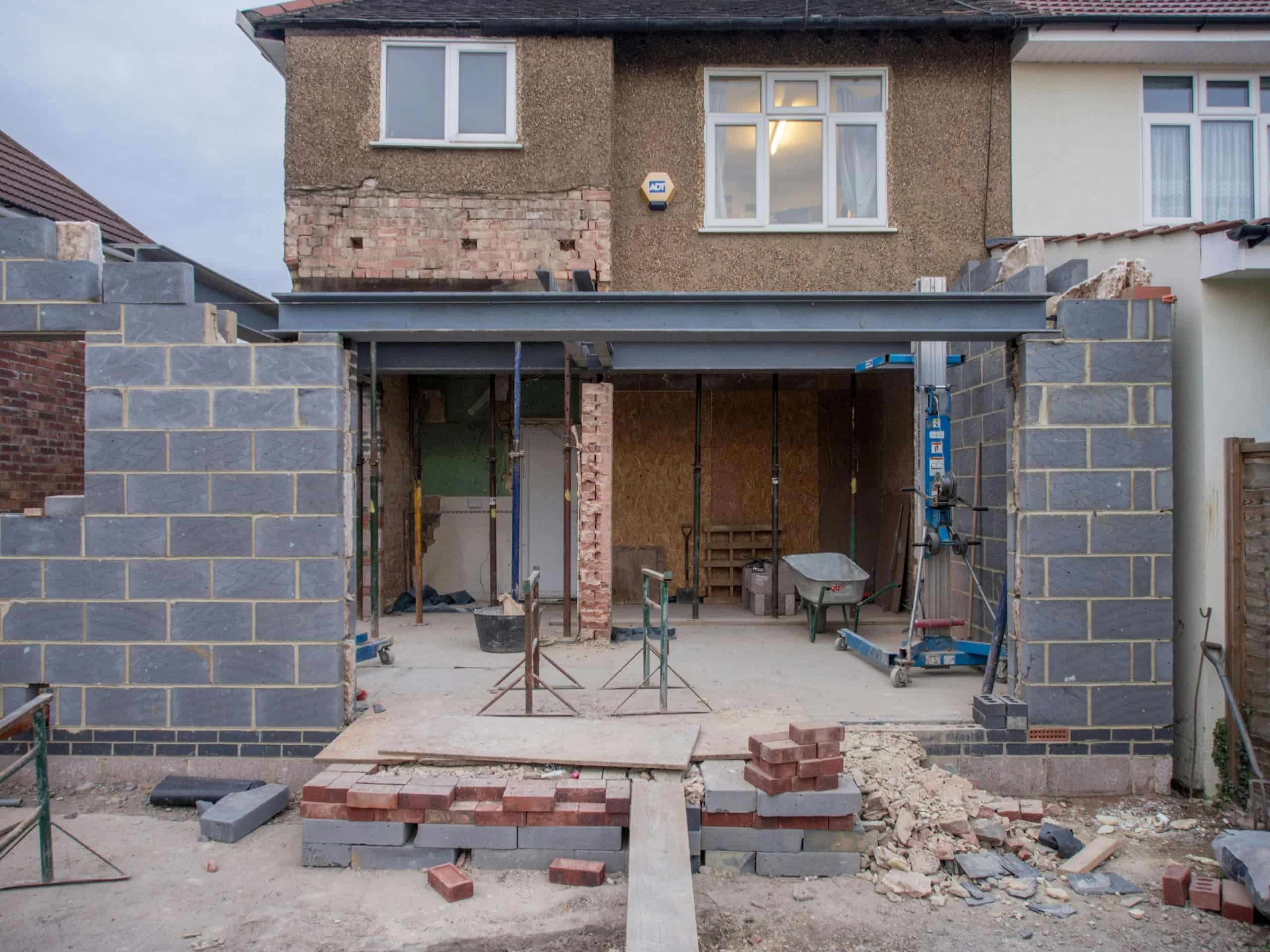
Notting Hill occupies one of West London's most characterful and sought-after postcodes, spanning W11 and parts of W10 within the Royal Borough of Kensington and Chelsea. Iconic stucco-fronted terraces, vibrant garden squares, and the colourful streets surrounding Portobello Road make this one of London's most recognisable neighbourhoods. From the grand houses lining Ladbroke Grove and the elegant pastel-painted rows of Pembridge Crescent, to the quieter residential streets near Westbourne Grove and the family homes of the Ladbroke Estate conservation area, Notting Hill combines architectural distinction with strong community character.
For homeowners in W11 and W10, extending an existing property rather than moving is increasingly the preferred route — and the numbers support it. Property values across Notting Hill are consistently strong, and additional well-designed square footage, particularly at ground floor level, delivers both daily quality of life and a meaningful long-term uplift. This guide is written specifically for Notting Hill homeowners and draws on Buildaway's experience delivering extensions across RBKC, combining honest 2026 pricing, local planning insight, and an 18-month labour warranty on every completed build.
How Much Does a House Extension Cost in Notting Hill (2026)?
Notting Hill sits at the premium end of London's construction market. The area's heritage sensitivity, density of conservation-protected streets, and the quality of finish expected in W11 all contribute to costs that reflect the postcode's character. Below are realistic 2026 mid-market figures:
Single-Storey Rear Extension
- Build-only: £3,200 – £4,300 per m²
- Fully finished with kitchen: £4,300 – £5,700 per m²
- Example: 25 m² kitchen-diner = £80,000 – £107,500 build-only or £107,500 – £142,500 turnkey.
Double-Storey Rear Extension
- Build-only: £3,000 – £4,000 per m²
- Fully finished: £4,000 – £5,300 per m²
- Example: 40 m² across two floors = £120,000 – £160,000 build-only or £160,000 – £212,000 turnkey.
Side Return & Wrap-Around Extensions
Particularly well-suited to Notting Hill's Victorian mid-terraces: £3,200 – £4,500 per m², depending on structural requirements, heritage obligations, and glazing specification.
All figures reflect fully compliant, Building Control certified builds appropriate for RBKC's planning and conservation framework.
What Drives the Price Up or Down
- Total floor area — the primary cost variable; larger footprints increase structural, insulation, and finishing expenditure proportionally.
- Structural steelwork — load-bearing wall removal is standard in Notting Hill's Victorian terrace stock and typically adds £3,000–£7,500 to overall costs.
- Conservation area requirements — the Ladbroke Estate, Pembridge, and Norland conservation areas cover a large proportion of W11's residential streets, and RBKC's material and design standards here are exacting.
- Listed building status — a number of Notting Hill's grandest properties are listed, requiring separate listed building consent and careful attention to reversibility and material authenticity.
- Glazing specification — bespoke steel-framed windows, heritage-style sashes, and high-performance bi-fold or sliding doors add £5,000–£13,000+ depending on scale and frame type.
- Basement potential — lower-ground floor extensions are an increasingly popular option in W11 where above-ground options are constrained; costs are substantially higher but the results can be exceptional.
- Kitchen and bathroom fit-out — kitchens in the Notting Hill market typically range from £15,000 to £40,000+; bathrooms from £8,000 to £20,000.
- Heating and mechanical upgrades — Megaflo systems or full boiler replacements add £3,500–£6,000 when additional bathrooms or a larger floor area require it.
- Site access and logistics — Notting Hill's busy residential streets, permit parking zones, and proximity to neighbours all contribute to site preliminary costs and require careful programme management.
Planning Permission & Building Control in Notting Hill
- Permitted Development (PD): Smaller single-storey rear extensions may qualify under PD rights, but W11 properties require careful assessment — conservation area designations and Article 4 Directions across many Notting Hill streets restrict or remove standard PD entitlements.
- Full Planning Permission: Required for double-storey extensions, any alteration with street-facing visibility, wrap-around designs, and all proposals outside PD thresholds or affecting a listed structure.
- Listed Building Consent: Several of Notting Hill's most distinguished properties carry listed status. Works to these buildings — including extensions and internal alterations — require a separate listed building consent application demonstrating that the character and fabric of the original structure will be preserved.
- Conservation Areas: The Ladbroke Estate, Pembridge, and Norland conservation areas impose strict design and material controls. RBKC's heritage officers assess all proposals for visual compatibility with the existing streetscape before consent is granted.
- Party Wall Act: Given the density of terraced and semi-detached housing throughout Notting Hill, the Party Wall etc. Act 1996 applies to the vast majority of extension projects. Formal written notices must be served on adjoining owners prior to any structural or excavation work.
- Building Control: Mandatory for all extension types, covering structural compliance, thermal performance, drainage, fire separation, and electrical sign-off. Buildaway works with both RBKC's building control inspectors and accredited private bodies.
How Long Will It Take?
- Design and planning preparation: 5–12 weeks
- Technical drawings, applications and statutory notices: 4–10 weeks (listed building and conservation area applications may extend this)
- On-site construction:
- Single-storey: 10–16 weeks
- Double-storey: 16–24 weeks
- Bespoke glazing, heritage joinery, premium kitchen fit-out, or basement elements will extend the programme beyond these ranges.
Typical Full Project Budget Breakdown (30 m² Double-Storey)
| Element | Typical Cost |
|---|---|
| Core structure & shell | £90,000 – £112,000 |
| Windows / doors / glazing | £7,000 – £14,000 |
| Kitchen supply & fit | £15,000 – £38,000 |
| Bathroom fit-out | £8,000 – £18,000 |
| Heating / boiler / Megaflo | £3,500 – £6,000 |
| Flooring & decorating | £8,000 – £20,000 |
| Professional fees & permissions | £5,500 – £13,000 |
| Total realistic range: | £140,000 – £205,000 |
(Listed properties, basement works, or premium bespoke specifications can push budgets to £270,000+.)
Why Notting Hill Clients Choose Buildaway
- RBKC conservation expertise — proven experience working within Notting Hill's conservation areas, navigating listed building requirements, and delivering designs that satisfy RBKC's heritage officers.
- Honest, itemised pricing — detailed quotes broken down by trade and stage, with no vague allowances or charges introduced after work begins.
- 18-month labour warranty — greater post-completion protection than the standard defects liability period offered by most comparable contractors.
- Fully accredited and insured — Gas Safe registered, NICEIC certified, and carrying comprehensive public liability insurance on every project.
- Single point of responsibility — Buildaway coordinates architects, structural engineers, heritage consultants, Party Wall surveyors, and all specialist trades from first meeting to final sign-off.