
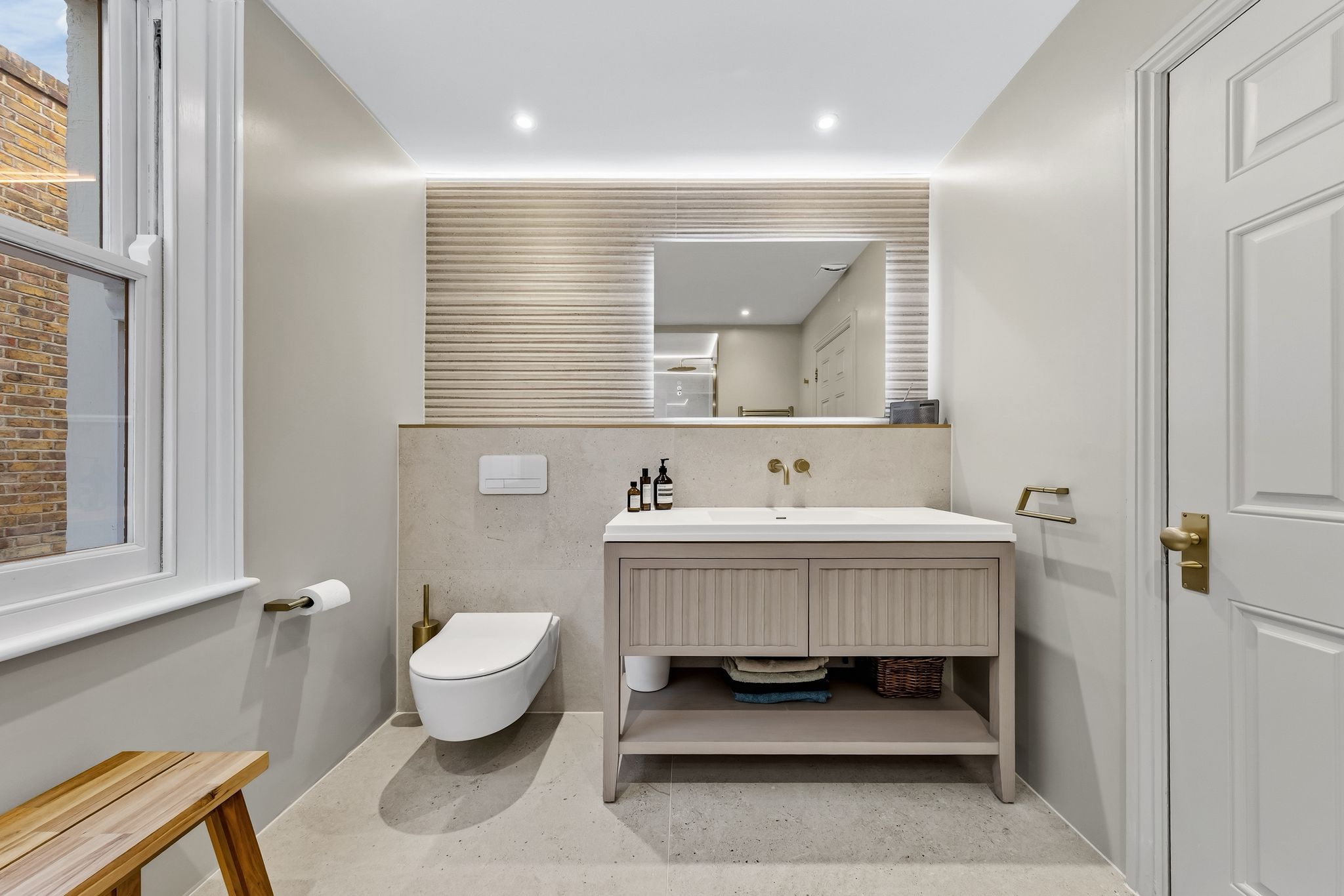
Thinking about a bathroom renovation in Fulham? Whether you're updating a Victorian terraced house off Fulham Road, refreshing a purpose-built flat near Parsons Green, or transforming a conversion property close to the Thames, having clear and honest information before you start saves time, money and stress. Fulham is one of southwest London's most sought-after residential neighbourhoods and its homes deserve bathrooms that reflect that. This guide covers what to realistically budget in 2026, what drives costs up or down, how long the work takes, and how to find a fitting team you can trust.
How much does a bathroom cost in Fulham?
Fulham sits across the SW6 postcode, with strong demand across Parsons Green, Hurlingham, Sands End, Fulham Broadway and the streets running between New Kings Road and Fulham Road. Property types vary from substantial Victorian and Edwardian terraces to mansion conversions and modern riverside developments and bathroom budgets reflect that range. Typical 2026 figures are:
| Scope | Typical Total Range* | Best For | What's Usually Included |
|---|---|---|---|
| Essentials Refresh | £6,500–£9,000 | Like-for-like upgrade with smarter, cleaner finishes | Suite replacement, minor plumbing adjustments, partial tiling, silicone finish, making good |
| Complete Refurb (Most Popular) | £9,000–£13,500 | Full strip-out and modernisation within existing layout | Re-boarding where needed, tanking in wet zones, full tiling, upgraded lighting, furniture installation, waste removal |
| Premium Wet Room / High-End | £13,500–£22,000+ | Layout change or top-specification finish | Tiled former with linear drain, full tanking, underfloor heating, niches, premium brassware, feature lighting |
*Ranges include typical labour, preparation, materials and waste. Final quotes vary with room size, tile area, extent of plumbing and electrical changes, and chosen specification.
What pushes costs up (or down) in Fulham homes
- Victorian and Edwardian fabric: Fulham's most common property type comes with original pipework, uneven floors and solid walls all of which require careful assessment before work begins.
- Layout changes: Moving a WC, basin or shower in a terraced house or flat conversion adds cost across plumbing and often electrics too.
- Tile choice: Large-format porcelain, encaustic tiles and natural stone all sit at different price points for both material and labour.
- Electrical scope: Downlights, demisters, heated towel rails and extractor fans each add to the electrical budget and must comply with Part P zoning requirements.
- Substrate condition: Older Fulham properties frequently need levelling, cement boarding and tanking before tiling can begin this is non-negotiable for a lasting result.
- Specification level: Brassware, screens and furniture vary enormously in price; the gap between functional and premium is significant.
Buildaway tip: In Fulham's older terraces and conversions, the condition of the substrate is the single biggest unknown. A thorough pre-start survey avoids costly surprises mid-project always insist on one before work begins.
Timeline: how long will it take?
- Essentials Refresh: 7–11 days
- Complete Refurb: 11–15 days
- Premium / Wet Room / Layout Change: 15–21+ days
Fulham properties particularly terraced houses with narrow hallways and upper-floor bathrooms can involve additional logistics around materials access and waste removal. We plan every project around your property's specific layout and your household's routine.
Do I need planning permission or building regulations?
Planning permission: Not required for the vast majority of internal bathroom refurbishments. Fulham falls within the London Borough of Hammersmith and Fulham, which contains several conservation areas including Hurlingham, Fulham and Walham Green. If your property sits within a conservation area or is listed, external changes (such as roof ventilation outlets) may require consent, though internal works typically do not. We'll flag anything relevant during your survey.
Building regulations:
- Electrics (Part P): All bathroom electrical work must comply with Part P including zoning, IP ratings and RCD protection. Certification is provided on completion.
- Ventilation: Mechanical extraction must be adequate for the room volume and ducted correctly to external air.
- Drainage: Significant changes to drainage or soil stack positions may require building control notification.
All relevant certificates are handed over on project completion.
Price breakdown (where the budget goes)
- Labour: ~55–65% (plumbing, tiling, carpentry, plastering, electrical)
- Materials and consumables: ~30–40% (suite, boards, adhesives, trims, grout, fixtures)
- Waste and sundries: ~5–10%
Fulham bathroom choices we're fitting most right now
Fulham homeowners tend to blend contemporary practicality with character the area's mix of period houses and modern flats creates demand for bathrooms that feel both timeless and functional. The most popular choices in 2026:
- Walk-in showers with tiled formers, linear drains and frameless glass panels clean and space-efficient
- Large-format porcelain in stone or matte concrete finishes for a calm, minimal aesthetic
- Period-sympathetic tiling metro, encaustic or terracotta-effect in Fulham's Victorian terraces
- Underfloor heating paired with IP-rated downlighting and heated towel rails
- Wall-hung vanity units with integrated storage to maximise space in smaller bathrooms
- Brushed brass or chrome brassware both performing strongly across Fulham's varied property styles
How to choose the right bathroom fitter in Fulham
Choosing a bathroom fitter in Fulham requires a higher level of scrutiny than in many areas the property values, the complexity of older buildings, and the expectations for finish are all elevated. Here's what to look for:
- Full trade coverage: One team handling plumbing, tiling, electrics and finishing no gaps between subcontractors.
- Compliance first: Part P electrical certification, correct ventilation, and building control where applicable.
- Experience with period properties: Fulham's Victorian terraces require specific knowledge of older substrates, pipe runs and structural quirks.
- Detailed written scope: Every quote should cover demo, prep, boarding, tanking, tile areas, trims, ventilation, making good and clear exclusions.
- Workmanship warranty: Buildaway provides an 18-month workmanship warranty on all projects.
- Local references: Ask to see completed Fulham projects and speak to previous clients.
Smart ways to manage the budget without compromising quality
- Keep the layout stable to avoid re-routing plumbing and electrics particularly important in Fulham's terraced houses where pipework runs can be complex.
- Choose a solid mid-range suite and spend more on brassware it's what you use every day and the quality difference is immediately noticeable.
- Large-format tiles reduce grout lines and speed up installation where the substrate suits them.
- Don't cut corners on waterproofing in a Fulham terrace, a leak through the floor affects the room below and can cause serious damage.
- Agree your lighting scheme early retrofitting downlights after tiling is disruptive and expensive.
Example Buildaway packages (guide only)
- Essentials Refresh £6,500–£9,000: Like-for-like suite swap, partial tiling to splash zones, upgraded taps and accessories, extractor check and replacement where needed, fresh silicone and making good throughout.
- Complete Refurb £9,000–£13,500: Full strip-out, substrate preparation and re-boarding where required, tanking to all wet zones, full floor-to-ceiling tiling, upgraded IP-rated lighting, wall-hung furniture installation, heated towel rail, waste removal and site clearance.
- Premium Wet Room / High-End £13,500–£22,000+: Layout reconfiguration as required, tiled former with linear drain and full tanking, underfloor heating with thermostat, premium brassware and screen, recessed niches, feature lighting and illuminated mirror, top-specification suite, complete making good.