
Planning a bathroom renovation in Chelsea? Whether you're updating a period townhouse in the Royal Borough of Kensington and Chelsea, refreshing a riverside apartment near Cheyne Walk, or transforming a mews property off the King's Road, getting the right information upfront makes all the difference. Chelsea is one of London's most desirable postcodes and its homes deserve bathrooms that match. This guide gives you honest, locally-relevant answers: what to budget in 2026, what drives cost, realistic timelines, and how to select a fitting team you can genuinely rely on.
How much does a bathroom cost in Chelsea?
Chelsea sits within one of London's most prestigious residential areas, and bathroom costs reflect both the calibre of properties and the specification homeowners typically expect. Across Chelsea and the surrounding SW3, SW10, and SW1W areas including Sloane Square, Fulham Road, Chelsea Embankment, and South Kensington realistic 2026 ranges are:
| Scope | Typical Total Range* | Best For | What's Usually Included |
|---|---|---|---|
| Essentials Refresh | £7,500–£10,000 | Like-for-like upgrade with cleaner, more refined finishes | Suite replacement, minor plumbing adjustments, partial tiling, silicone finish, making good |
| Complete Refurb (Most Popular) | £10,000–£15,000 | Full strip-out and modernisation of an existing layout | Re-boarding where needed, tanking in wet zones, full tiling, upgraded lighting, furniture installation, waste removal |
| Premium Wet Room / High-End | £15,000–£25,000+ | Layout reconfiguration or top-specification finish | Walk-in / tiled former with linear drain, full tanking, underfloor heating, niches, premium brassware, feature lighting |
*Ranges include typical labour, preparation, materials and waste disposal. Final quotes vary based on room size, tile area, extent of plumbing and electrical changes, and chosen specification.
What pushes costs up (or down) in Chelsea homes
- Period property complexities: Many Chelsea homes are Victorian or Edwardian conversions, mansion flats, or listed buildings. Original pipework, uneven substrates, and historic fabric all require careful handling.
- Layout changes: Repositioning a WC, basin or shower stack in a Chelsea flat adds both plumbing and structural coordination.
- Tile specification: Large-format porcelain, natural stone, or handmade tiles (popular in Chelsea's more traditional homes) each carry different labour and material costs.
- Electrical scope: Downlighting, mirror demisters, heated towel rails, smart controls and zone-compliant fan installations all add to the electrical budget.
- Waterproofing and substrate: Older Chelsea properties often need additional levelling, cement boarding and tanking before a single tile is laid.
- Brassware and furniture grade: Chelsea homeowners frequently specify premium European or British brassware the range from functional to luxury is significant.
Buildaway tip: In Chelsea's character properties, invest in thorough preparation boards, levelling and tanking before worrying about the tile brand. A beautiful tile on a poorly prepared substrate will crack or leak. Get the foundation right, then let the specification shine.
Timeline: how long will it take?
- Essentials Refresh: 8–12 days
- Complete Refurb: 12–16 days
- Premium / Wet Room / Layout Change: 16–22+ days
Chelsea properties often involve additional access considerations basement bathrooms, listed building constraints, communal stairwells in mansion flats, or restricted parking for materials delivery. We plan every project around your household and building's specific requirements, and phase works to minimise disruption throughout.
Do I need planning permission or building regulations?
Planning permission: Most internal bathroom refurbishments in Chelsea do not require planning permission. However, Chelsea falls within the Royal Borough of Kensington and Chelsea (RBKC), which has some of the highest concentrations of listed buildings and conservation areas in the country. If your property is listed, or sits within a designated conservation area, some works may require Listed Building Consent even when entirely internal. We'll always flag this during your survey and advise accordingly. For further guidance, the RBKC Planning Portal and the national Planning Portal are your starting points.
Building regulations:
- Electrics (Part P): Bathrooms are classified as a "special location" under UK building regulations. All electrical works including new lighting circuits, extractor fans, heated towel rail connections and shaver sockets must comply with Part P zoning and IP rating requirements and be certified by a qualified electrician.
- Ventilation: Adequate mechanical extraction is a building regulations requirement. We specify fans to match your room volume and ensure correct ducting to external air, not just to a void or loft.
- Drainage and structure: Significant drainage alterations, soil stack changes or structural modifications may require building control approval. We'll advise if this applies to your project.
You will receive all relevant certificates including Part P electrical certification on completion of your project.
Price breakdown (where the budget goes)
- Labour: ~55–65% (plumbing, tiling, carpentry, plastering, electrical)
- Materials and consumables: ~30–40% (suite, boards, adhesives, trims, grout, fixtures and fittings)
- Waste, sundries and access: ~5–10% (higher in central Chelsea due to parking and access logistics)
Chelsea bathroom choices we're fitting most right now
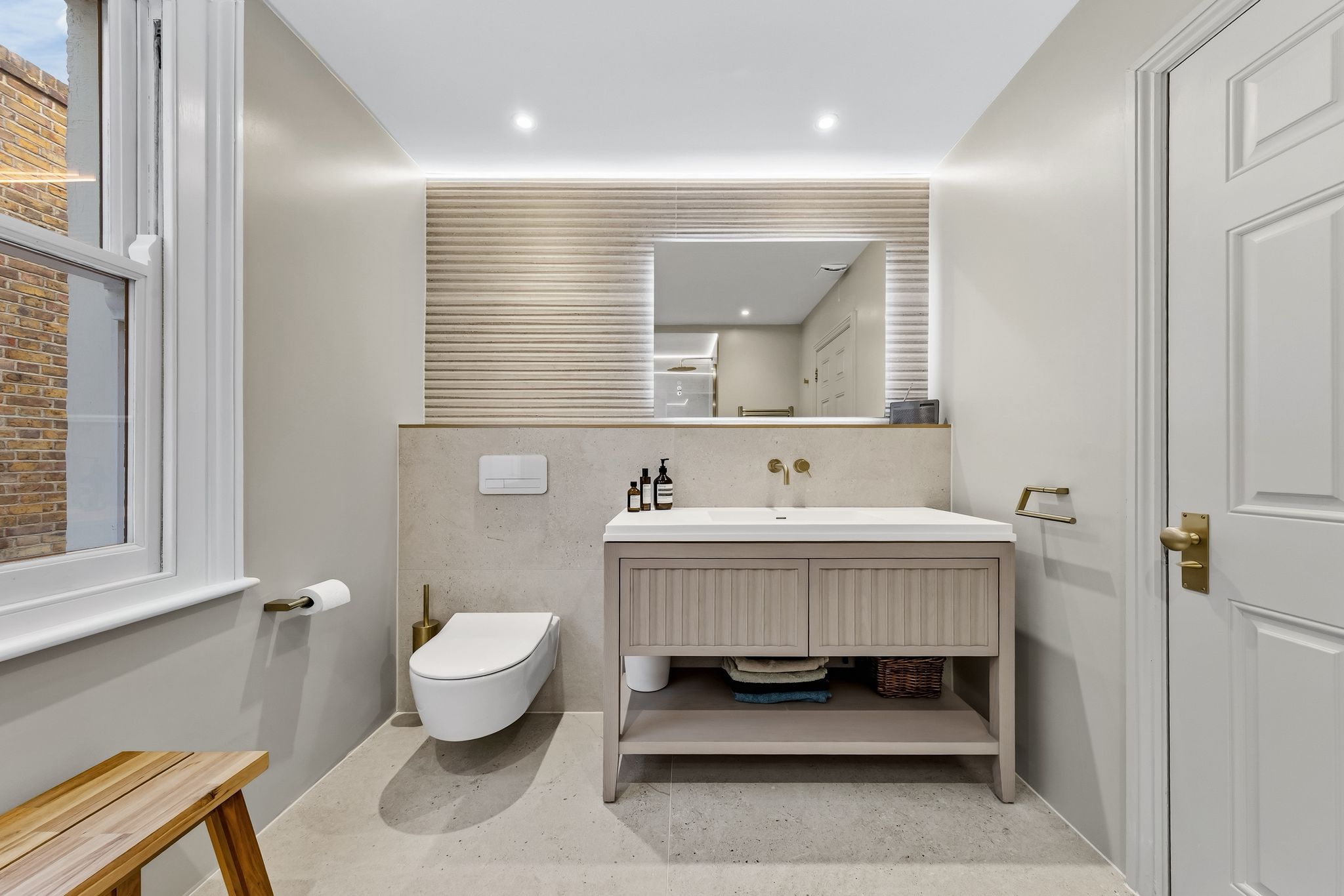
Chelsea's design culture shaped by its proximity to the world-class showrooms along the Fulham Road, the Design Centre at Chelsea Harbour, and the King's Road's long tradition of interior innovation means homeowners here tend to have strong, considered tastes. The most popular choices we're seeing in 2026:
- Walk-in showers with tiled formers, recessed linear drains and frameless glass clean, contemporary and practical
- Large-format porcelain in stone-effect or concrete finishes for minimal grout lines and a calm, gallery-like aesthetic
- Natural stone accents Calacatta, Carrara or honed slate used as feature walls or vanity tops in more traditional Chelsea interiors
- Underfloor heating paired with IP-rated ambient downlighting and illuminated mirror cabinets
- Wall-hung furniture with integrated storage niches, keeping smaller Chelsea bathrooms feeling open and uncluttered
- Brushed brass, polished nickel or matte black brassware all performing strongly in Chelsea's mix of period and contemporary homes
How to choose the right bathroom fitter in Chelsea
Choosing a bathroom fitter in Chelsea requires a higher level of scrutiny than in many areas the property values, the complexity of older buildings, and the expectations for finish are all elevated. Here's what to look for:
- End-to-end accountability: A single team responsible for plumbing, tiling, carpentry, electrical and finishing means one point of contact and no gaps between trades.
- Compliance and certification: Insist on Part P electrical certification, correct ventilation specification, and building control notification where required. In RBKC, this matters.
- Experience with period properties: Ask specifically whether the fitter has worked in Victorian conversions, mansion flats or listed buildings in Chelsea or Kensington the challenges are meaningfully different from a modern semi.
- Detailed written scope: Your quote should explicitly cover demolition, substrate preparation, boarding, tanking, tile areas and trims, ventilation, making good, and clear exclusions. Vague quotes lead to unexpected extras.
- Workmanship warranty: A confident fitter backs their work. Buildaway provides an 18-month workmanship warranty on all projects.
- Local proof: Ask to see completed projects in Chelsea, SW3, or SW10 and speak to previous clients.
Smart ways to manage the budget without compromising quality
- Retain the existing layout wherever possible to avoid re-routing plumbing and electrics in Chelsea mansion flats and conversions, stack relocation can be particularly costly.
- Invest in a quality mid-range suite, then upgrade the brassware taps and showers are what you touch every day, and the difference between mid and premium spec is felt immediately.
- Choose large-format tiles where the room and substrate suit them; fewer grout joints mean a cleaner finish and faster installation.
- Never compromise on waterproofing. In an older Chelsea property especially a flat where a leak affects the floor below tanking isn't optional. It's essential.
- Plan lighting early. Retrofitting downlights or dimmers after tiling is expensive. Get your lighting scheme agreed before work starts.
Example Buildaway packages (guide only)
- Essentials Refresh £7,500–£10,000: Like-for-like suite replacement, partial tiling to splash zones, upgraded taps and accessories, extractor fan check and replacement where needed, fresh silicone and making good throughout.
- Complete Refurb £10,000–£15,000: Full strip-out, substrate preparation and re-boarding where required, tanking to all wet zones, full floor-to-ceiling tiling, upgraded IP-rated lighting, wall-hung furniture installation, heated towel rail, waste removal and site clearance.
- Premium Wet Room / High-End £15,000–£25,000+: Layout reconfiguration as required, tiled former with linear drain and full tanking, underfloor heating with thermostat, premium brassware and screen, recessed niches, feature lighting and illuminated mirror, top-specification suite, complete making good and decoration allowance.