
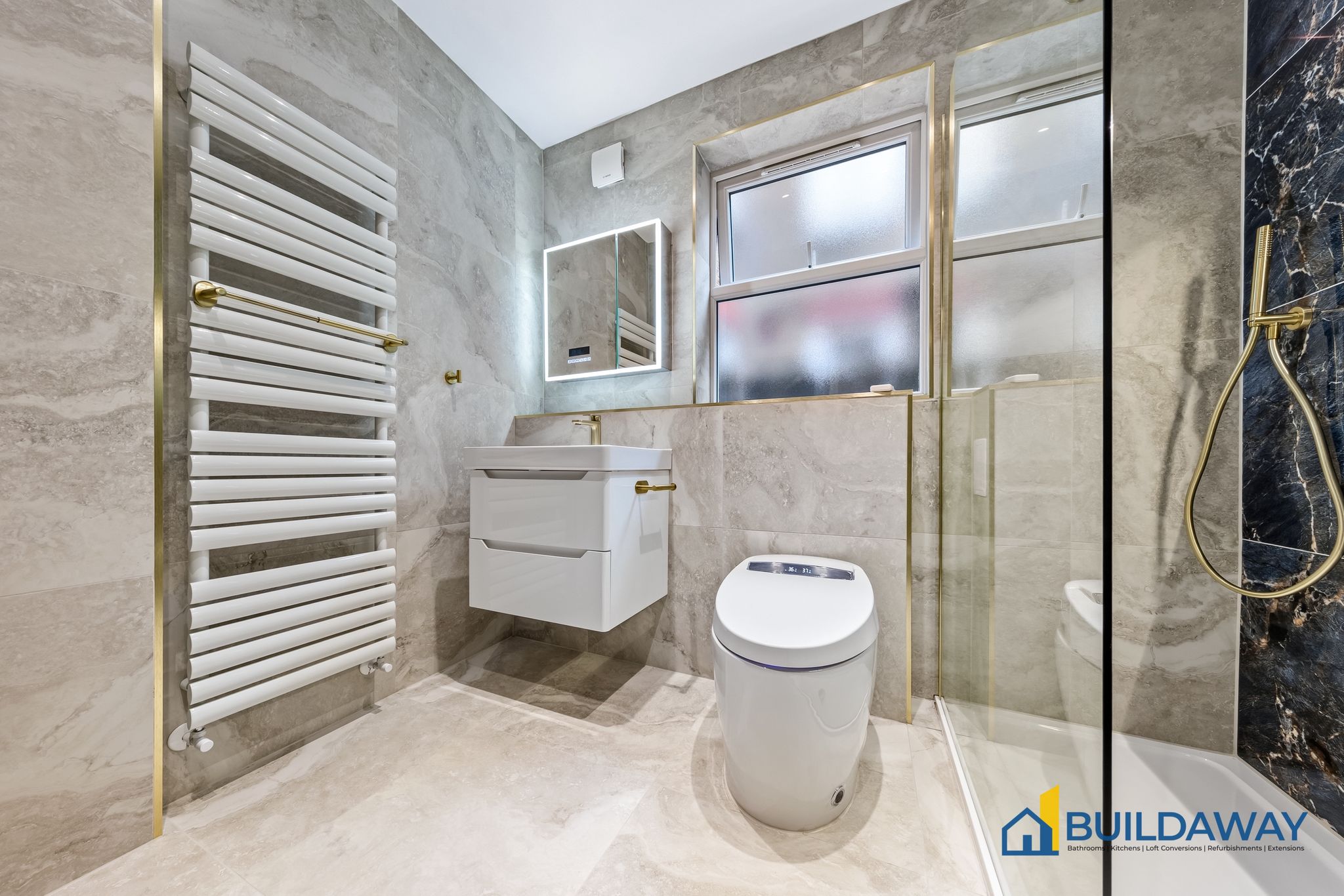
1. What Sits Behind a “Finished” Bathroom
When a renovation is handed over, everything appears complete. Fresh grout. Polished fittings. Smooth paintwork. Yet the true measure of quality lies in what cannot be seen — how waste pipes were routed, how floors were strengthened, how moisture is extracted day after day.
Across Greenwich, especially within SE10, SE8 and parts of SE3, homeowners often discover that small technical oversights become expensive repairs later. Ceiling staining in flats below. Steam damage inside cupboards. Electrical queries during property sales.
The core issue is rarely the tiles.
It is the planning beneath them.
Below are seven matters every professional bathroom fitter should address clearly before starting work.
2. Why Greenwich Homes Require Informed Planning
Greenwich presents a complex mix of historic buildings and modern developments.
You will find:
- Period townhouses near Old Royal Naval College
- Apartments close to Cutty Sark
- Victorian terraces around Maze Hill
- Contemporary riverside flats along the Thames
Many properties sit within conservation areas. Others are located within multi-storey developments where drainage and ventilation routes affect neighbouring flats.
Bathroom installations here often involve shared soil stacks, restricted service voids and strict management regulations. Planning must consider both building fabric and external compliance.
3. The 7 Things Bathroom Fitters Often Don't Explain
1. Building Regulations Compliance Is Not Optional
What it is: Bathroom renovations are governed by UK Building Regulations covering drainage, ventilation, electrical safety and certain structural works. This applies whether the property is a house or a flat.
Why it matters: If work is not compliant, it can create serious complications during resale, remortgaging or insurance claims. Missing certification is one of the most common issues raised during conveyancing.
How it affects Greenwich homes: In SE10 and surrounding areas, many properties are either listed-adjacent, located in conservation areas, or part of converted buildings. Alterations made without formal approval are frequently identified during property transactions.
What a professional fitter should do: Clearly explain which parts of the project are notifiable, liaise with Building Control or operate under a competent person scheme, and confirm exactly what documentation you will receive at completion.
2. Ventilation Must Meet Specific Extraction Standards
What it is: Part F of the Building Regulations sets minimum mechanical extraction rates. Bathrooms with a bath or shower require 15 litres per second for intermittent systems or 8 litres per second for continuous systems.
Why it matters: Insufficient ventilation leads to persistent condensation, mould growth and gradual damage to internal finishes and structures.
How it affects Greenwich homes: Many Greenwich flats have limited external wall access, and duct routes may need to connect into managed systems. Riverside properties can also experience higher ambient humidity, increasing the importance of proper extraction.
What a professional fitter should do: Specify compliant fans, ensure ducting discharges externally rather than into ceiling voids, and confirm the system meets regulatory airflow requirements.
3. Waterproofing and Tanking Are Essential in Wet Zones
What it is: Tanking involves installing waterproof membranes behind tiles in areas exposed to regular water contact. Tiles and grout alone are not waterproof barriers.
Why it matters: Without proper waterproofing, moisture can penetrate into walls and floors, leading to structural decay, ceiling damage and leaks into neighbouring properties.
How it affects Greenwich homes: In converted townhouses and apartment blocks across SE10, leaks can affect multiple properties vertically. Timber floor structures in older homes are particularly vulnerable to slow water ingress.
What a professional fitter should do: Identify all wet areas clearly, apply certified waterproof membranes before tiling and explain why this stage protects both your property and adjoining units.
4. Drainage Layouts Must Be Calculated Correctly
What it is: Waste pipes must maintain correct gradients and sufficient diameter to ensure efficient discharge.
Why it matters: Incorrect gradients cause slow drainage, odours and recurring blockages that often require invasive corrective work.
How it affects Greenwich homes: In apartment buildings, soil stacks are frequently shared. Altering layouts without proper calculation can impact neighbouring flats. In period houses, cast iron stacks and vertical pipe runs require careful integration.
What a professional fitter should do: Inspect existing drainage thoroughly, maintain appropriate falls (typically minimum 1:40) and obtain approval before concealing pipework.
5. Electrical Safety Zones Have Strict Requirements
What it is: Bathrooms are divided into defined safety zones, each with specific IP rating and voltage requirements for fittings.
Why it matters: Incorrect installations pose safety risks and will fail certification under Part P of the Building Regulations.
How it affects Greenwich homes: Older electrical systems in converted properties may lack RCD protection. Modern lighting, heated mirrors and underfloor heating may require circuit upgrades.
What a professional fitter should do: Explain zone classifications, ensure compliant fittings are installed and provide Part P certification upon completion.
6. Structural Floor Capacity Must Be Assessed
What it is: Modern bathrooms can add significant weight through stone tiles, large-format porcelain, freestanding baths and water load.
Why it matters: If floors are not adequately supported, movement can occur, leading to cracked grout, failed seals and long-term structural issues.
How it affects Greenwich homes: Original joists in period SE10 homes were not designed for heavy contemporary installations. In flats, structural movement can affect multiple units.
What a professional fitter should do: Assess floor strength before installation, reinforce where required and confirm structural stability before tiling begins.
7. Programme Planning Must Reflect Urban Constraints
What it is: Bathroom renovations involve deliveries, waste removal, inspections and temporary service shutdowns.
Why it matters: Poor coordination can delay works and cause disruption to neighbours.
How it affects Greenwich homes: In managed apartment blocks and conservation areas, access restrictions, lift bookings and parking controls can significantly affect programme length.
What a professional fitter should do: Provide a realistic schedule, coordinate with managing agents where necessary and clearly communicate how long facilities will be unavailable.
4. Common Issues Reported in Greenwich After Poor Installation
- Water damage to neighbouring flats
- Persistent humidity and mould
- Management company compliance queries
- Slow drainage or recurring blockages
- Cracked grout due to floor movement
- Missing completion documentation
These outcomes are usually preventable.
5. Choosing a Bathroom Fitter in Greenwich
Before committing, confirm:
- Clear explanation of compliance requirements
- Proper ventilation planning
- Experience in flats and managed buildings
- Drainage inspection and calculations
- Written programme including access coordination
- Completion certificates on handover
6. How Buildaway Assists Greenwich Homeowners
Buildaway approaches bathroom renovations in Greenwich with regulatory awareness and structural care.
We:
- Assess compliance requirements early
- Plan installations suited to SE10 and riverside developments
- Coordinate with management companies where required
- Reinforce floors where necessary
- Provide formal completion documentation
If you are considering a bathroom renovation in Greenwich, we are available to review your property before works begin.
📞 020 8108 0388
Buildaway. Straight answers. Proper installations. Bathrooms that last.