
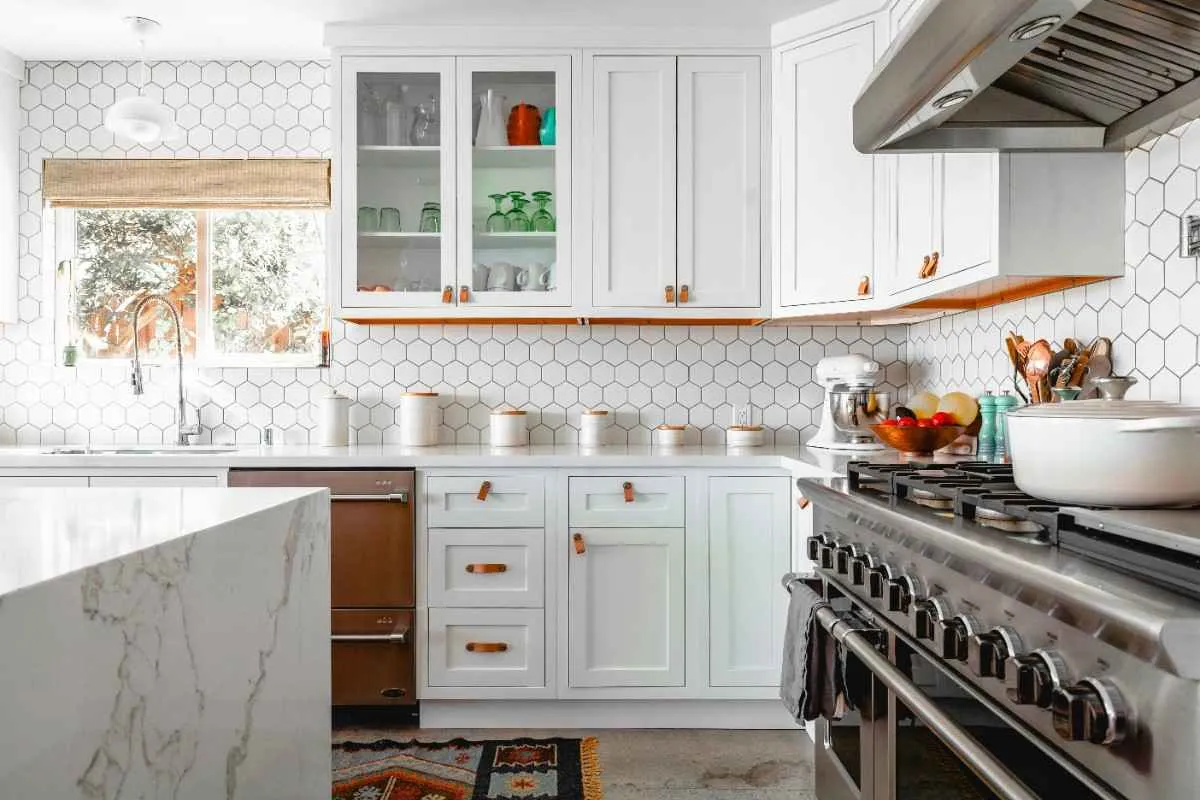
1. The Reality: Kitchen Renovations Don't Fail by Accident
When a kitchen renovation goes wrong in Blackheath, the cause is almost never the unexpected. It is the unexamined. The things that should have been checked before work started were not — and the cost of that oversight lands squarely in the middle of the project.
In Blackheath postcode SE3 — covering the Village, Blackheath Park, Cator Estate, Shooters Hill Road, Lewisham Road and the Georgian and Victorian streets framing the Heath — the housing stock presents a set of renovation conditions unlike almost anywhere else in South East London:
- Grand Georgian and Victorian terraces around Tranquil Vale and Montpelier Row where infrastructure has rarely been comprehensively updated
- Substantial semi-detached homes on the Cator Estate with original structural arrangements that resist straightforward modification
- Edwardian properties along Shooters Hill Road and Lee Road with electrical systems installed a century ago and never fully replaced
- Period conversions throughout SE3 where original layouts survive largely intact and impose significant constraints on what is feasible
These are not occasional complications. They are the conditions that define kitchen renovation work in Blackheath. This guide identifies the ten most common failure points and what needs to happen before each one gets the chance to derail your project.
2. Why Kitchen Renovations Go Wrong in Blackheath Homes
The character of housing across SE3 produces renovation risks that are as consistent as the architecture itself:
- Georgian terraces around Blackheath Village and Eliot Place where lead supply pipework and original gravity drainage remain in active use
- Victorian and Edwardian semis on the Cator Estate and along Blackheath Park where fuse boards have never been upgraded from their original configuration
- Large detached properties near Hare and Billet and the Heath boundary where rear extensions and basement conversions have created complex drainage arrangements
- Period properties throughout SE3 where solid brick construction and deep floor voids create persistent ventilation and damp challenges in rear-facing kitchens
The higher property values in Blackheath can create a false sense that complexity has already been resolved in these homes. In most cases, it has simply been lived with for longer.
The 10 Things That Go Wrong
Each issue below follows the same pattern: what fails, why it happens, why it is common locally, and how to avoid it.
1. Poor Layout Planning
What goes wrong
The kitchen is installed and finished, but the room does not function as expected. The working triangle is broken. Appliance doors obstruct one another. There is not enough clear worktop where cooking actually happens.
Why it happens
The design is approved on the basis of how it looks in a drawing rather than how it will work in practice. Nobody tests the movement sequence in the actual room before committing to a layout.
Why common in Blackheath
Period kitchens across SE3 — basement kitchens in Georgian terraces near Eliot Place, rear scullery rooms in Victorian properties along Wemyss Road, narrow back kitchens in Edwardian semis on the Cator Estate — were built for a domestic life that bore no resemblance to contemporary cooking. Adapting these spaces for modern use requires deliberate planning around their proportions and constraints. A layout that works in a new-build will not simply transfer to a room that is two centuries old.
How to avoid it
Map out functional zones for cooking, preparation, washing and storage before any specifications are drawn up. Walk the practical sequence in the room itself. Layout changes initiated after installation is underway add between £500 and £2,000 per alteration to the total cost.
2. Underestimating Structural Work
What goes wrong
Demolition begins and the wall is structural. Everything stops. A structural engineer is appointed under pressure, temporary works go in and the project extends by weeks rather than days.
Why it happens
No structural assessment is commissioned before the work is scoped or quoted. The assumption is that the wall is non-loadbearing because it looks like a partition.
Why common in Blackheath
The appetite for open-plan kitchen-diners is strong in Blackheath — particularly in the larger Georgian and Victorian properties around Blackheath Park, Pond Road and the roads directly off the Heath. These are buildings where internal walls frequently carry loads from floors, roofs and party wall arrangements that are not visible from a simple inspection. The cost of discovering this on demolition day rather than during planning is substantial.
How to avoid it
Commission a structural engineer's assessment before any wall removal is quoted or contracted. When a wall proves to be load-bearing, the combined cost of fabricating and installing steelwork, temporary propping and obtaining Building Control sign-off typically runs from £3,000 to £10,000.
3. Ignoring Plumbing Upgrades
What goes wrong
The completed kitchen develops water pressure issues. A joint concealed behind finished cabinetry begins to fail. The waste system blocks with a regularity that points to an undersized installation. These problems surface after the project is signed off and the contractor has moved on.
Why it happens
Pipework that has been functioning, however imperfectly, is left undisturbed to contain costs. The assumption is that what has not failed recently will not fail once the kitchen is modified.
Why common in Blackheath
Georgian and early Victorian properties throughout SE3 — streets around Tranquil Vale, Montpelier Row and the older parts of Blackheath Village — contain supply pipework in some cases over a century old. Lead pipes and undersized gravity waste runs remain in service in a significant number of these homes. Neither is adequate to serve a modern kitchen layout, particularly once sinks, appliances or waste connections have been repositioned.
How to avoid it
Have the supply and waste system assessed before the first fix begins and replace what is inadequate while access is unobstructed. Adding or relocating a connection at this stage costs between £400 and £1,500. The same work carried out once surfaces are tiled and cabinetry is fitted costs proportionally more and requires finished work to be opened up.
4. Electrical Overload or Poor Socket Planning
What goes wrong
The finished kitchen has sockets in the wrong places and not enough of them. Running high-draw appliances simultaneously trips the circuit. The consumer unit cannot accommodate the electrical demand of a fully specified kitchen and requires complete replacement.
Why it happens
The electrical scope is built around upgrading what currently exists rather than designing from scratch for what the kitchen actually requires.
Why common in Blackheath
A large share of properties across SE3 — Georgian terraces around Eliot Place, Victorian semis throughout the Cator Estate, Edwardian houses along Shooters Hill Road — retain electrical installations that were put in during the twentieth century and have never been comprehensively reviewed. Consumer units in these homes regularly lack the capacity and the RCD protection that current regulations mandate for a kitchen installation.
How to avoid it
Compile the full appliance and socket schedule before the first fix stage is reached. Kitchen electrical upgrades in Blackheath typically cost between £400 and £1,200. Carrying out the same work after cabinets are installed and walls are finished adds materially to both the cost and the disruption.
5. Inadequate Ventilation
What goes wrong
Condensation appears on wall surfaces and window reveals within weeks of the kitchen being in regular use. Mould develops on external wall faces and above cabinetry. The room holds cooking odours long after meals are finished.
Why it happens
Extraction is chosen to complement the kitchen design aesthetically rather than to address the ventilation requirement of the room. The duct route is treated as something to resolve once the layout is fixed.
Why common in Blackheath
Solid masonry walls and deep floor voids throughout Blackheath's period housing stock create cold surfaces and limited natural airflow. Basement kitchens in Georgian terraces near Eliot Vale and rear kitchen extensions in Victorian properties along Wemyss Road and Morden Road are particularly vulnerable — spaces where moisture accumulates quickly when extraction has not been properly specified and positioned.
How to avoid it
Determine the extraction route and hood position before any cabinetry layout is finalised. All new extraction must meet Building Regulations Part F. In Blackheath's period properties, where duct routes through solid masonry require careful planning, this decision needs to be made early — not retrofitted around a finished kitchen.
6. Poor Quality Installation
What goes wrong
The finished kitchen reveals a standard of workmanship that does not reflect the outlay. Cabinetry is not plumb. Tiling lacks consistency. Worktop joints are visible. The quality of the finish falls short of what the specification called for.
Why it happens
The installation is awarded on price without sufficient scrutiny of what that price actually delivers in terms of skill and experience.
Why common in Blackheath
Blackheath and SE3 attract premium kitchen specifications. Labour rates in this part of South East London run between 15 and 25 percent above the national average. Homeowners occasionally attempt to offset the cost of high-specification products by appointing the cheapest available fitter — without verifying whether that fitter has the capability to install them to the required standard. Poor workmanship was the primary cause identified in over half of all kitchen renovation complaints recorded in 2025.
How to avoid it
Ask for references from completed projects in SE3 or nearby SE and BR postcodes and follow them up directly. Confirm that current public liability insurance is held. Specify the expected finish standard explicitly in a written scope of works before any contract is signed.
7. Appliance Delivery Delays
What goes wrong
Installation completes but the kitchen cannot be commissioned. A key appliance — a range cooker, integrated refrigeration or dishwasher — is still weeks from delivery with no firm date in place.
Why it happens
Appliances are ordered when installation begins rather than far enough in advance to guarantee delivery before the project finishes.
Why common in 2026
Delivery lead times on integrated and premium kitchen appliances remain an active challenge for homeowners across South East London including SE3. Confirmed delivery windows for range cookers, integrated refrigeration and dishwasher units commonly run from four to twelve weeks. In Blackheath, where bespoke and high-specification products are routinely specified, lead times at the longer end of this range are the norm rather than the exception.
How to avoid it
Order every appliance between eight and twelve weeks before the planned installation start. Secure written confirmation of stock availability and a delivery estimate at the point of purchase rather than at the point of installation.
8. Budget Underestimation
What goes wrong
The project significantly exceeds its budget. Costs that were invisible at the planning stage — failed tanking in a basement kitchen, deteriorated original floor timbers, lead paint on existing surfaces requiring controlled removal — arrive mid-project without contingency to absorb them.
Why it happens
The budget is built around what is accessible and measurable before work begins. What lies beneath original finishes in a property that may be 150 or 200 years old is neither.
Why common in Blackheath
Period properties throughout SE3 — Georgian terraces, Victorian semis, Edwardian houses — regularly produce unforeseen costs once original floor and wall finishes are removed. Basement kitchens near the Heath carry additional risks of historic moisture ingress. Unexpected remedial costs of between £2,000 and £5,000 are a common outcome in this housing stock and should be treated as a likely expenditure rather than a remote possibility.
How to avoid it
Allocate a contingency of between ten and twenty percent of the total project budget before any work starts. In Blackheath's period housing stock, this is not a precaution — it is an acknowledgement of what the buildings typically contain.
9. Poor Trade Coordination
What goes wrong
Trades arrive out of sequence. Completed work is opened back up to allow a later stage to proceed. Days are lost and the programme compounds its delay with each subsequent stage.
Why it happens
Individual trades are booked and managed in isolation. No single party holds responsibility for the sequence or tracks what each stage depends on.
Why common in Blackheath
Skilled tradespeople working across SE3 and adjacent areas including Greenwich, Lewisham and Lee carry multiple concurrent projects. Without a coordinator dedicated to the Blackheath job, work is scheduled around other commitments rather than structured as a managed programme. In a period property where each stage has implications for the next, the cost of poor sequencing is amplified.
How to avoid it
Appoint a single party — a main contractor or dedicated project manager — to own the programme and coordinate all trades before the project begins. In a Blackheath period property renovation, this is not a premium addition to the project; it is a basic requirement for the programme to hold.
10. Skipping Proper Finishes and Detailing
What goes wrong
The snagging stage is shortened or skipped entirely. Sealant lines are applied without care. Plinths are misaligned. Gaps between units and walls remain open. In a property where the surrounding finishes are of a high standard, an incomplete kitchen finish is immediately apparent.
Why it happens
The contractor is under pressure to begin the next project. The detailing and finishing stage is the first part of the programme to be compressed when that pressure builds.
Why common in Blackheath
Experienced trades working in SE3 carry full order books. In a location where renovation projects are frequent and the specification levels are high, the gap between a well-finished kitchen and a rushed one is particularly visible. The snagging stage — which shapes the lasting impression of the completed room — is consistently where that gap opens up.
How to avoid it
Structure the final payment to retain between five and ten percent until a formal snagging walkthrough has been carried out, all items have been recorded and all outstanding works have been completed to an agreed standard by both parties.
4. The Cost of Getting It Wrong
A kitchen renovation in Blackheath that encounters avoidable problems carries costs well beyond what the remedial bill alone represents:
- Rework and remediation following a failed installation typically costs between £3,000 and £8,000
- Projects disrupted by unplanned issues commonly extend from an expected two weeks to four to six weeks
- Structural or electrical work completed without Building Regulations sign-off is routinely identified by surveyors when a Blackheath property comes to market — where transaction values make this particularly consequential
- The household disruption of a stalled renovation in a period property, where access and living conditions are already constrained, accumulates quickly
The UK median kitchen renovation now stands at £17,500, having risen 34 percent since 2024. In Blackheath, where specification levels and property values sit significantly above the national average, the financial exposure from a poorly managed project is proportionally greater.
5. How to Plan a Kitchen Renovation Properly in Blackheath
Before any contractor is appointed or any scope is agreed, work through the following:
- Commission a structural assessment before any walls are scheduled for removal
- Have existing plumbing and electrical installations inspected before the first fix stage
- Place all appliance orders at least eight to twelve weeks before the installation start date
- Allocate a contingency of ten to twenty percent within the total project budget
- Obtain a detailed written scope of works before signing any contract
- Establish clearly which elements of the project require Building Regulations approval
- Agree a programme with realistic milestone dates documented before work begins
For a full cost breakdown specific to SE3, refer to our dedicated kitchen renovation planning guide for Blackheath homeowners.
How Buildaway Can Help Blackheath Homeowners
Buildaway applies a planning-first approach to every kitchen project across SE3.
We:
- Assess structural conditions before any quotation is submitted
- Inspect existing plumbing and electrical installations at the earliest stage
- Build programmes with realistic timelines and clearly defined milestones
- Coordinate all trades under a single point of responsibility
- Manage Building Regulations compliance and conservation area considerations throughout
Kitchen renovations in Blackheath demand a level of pre-project investigation that many contractors overlook. Period properties across SE3 — Georgian terraces near Tranquil Vale, Victorian semis throughout the Cator Estate, Edwardian homes along Shooters Hill Road — conceal conditions that shape both the cost and the complexity of a kitchen renovation. The only way to manage them is to find them before the project starts.
If you are planning a kitchen renovation in Blackheath and want it handled with the attention your property deserves, speak with Buildaway.
📞 020 8108 0388
No shortcuts. No surprises. Just properly managed renovations.